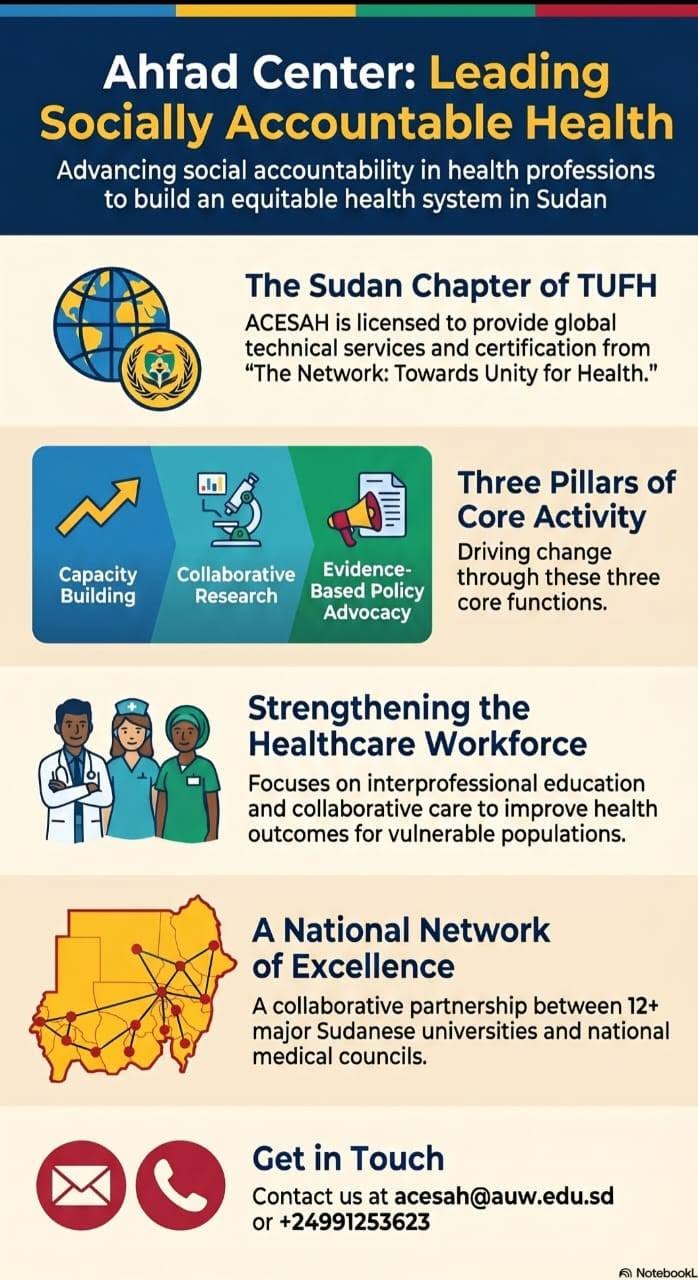
Ahfad University for Women (AUW) marked a significant milestone in its commitment to social responsibility and accountability with the official launch of the Ahfad Center of Excellence for Social Accountability in Health on Tuesday, 30 June 2026.
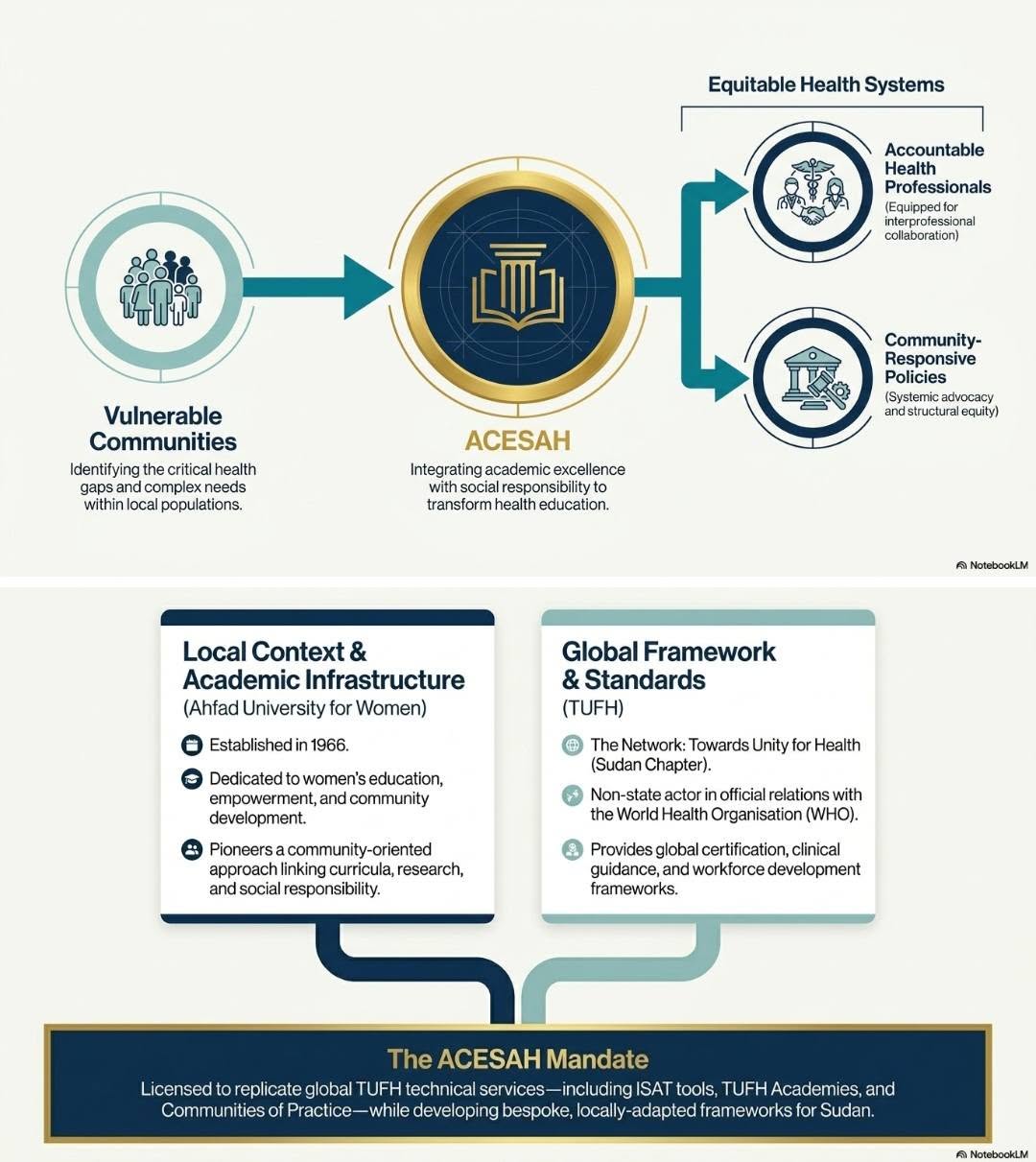
The newly established Center serves as the Sudan Chapter of the Network: Towards Unity for Health (TUFH) and is licensed to implement and replicate TUFH’s internationally recognized technical services and tools. These include the Institutional Self-Assessment Tool (ISAT) for Social Accountability and Interprofessional Education, TUFH Academies, and Communities of Practice. The Center will also develop and disseminate innovative tools to strengthen social accountability in health professions education and the broader health system.
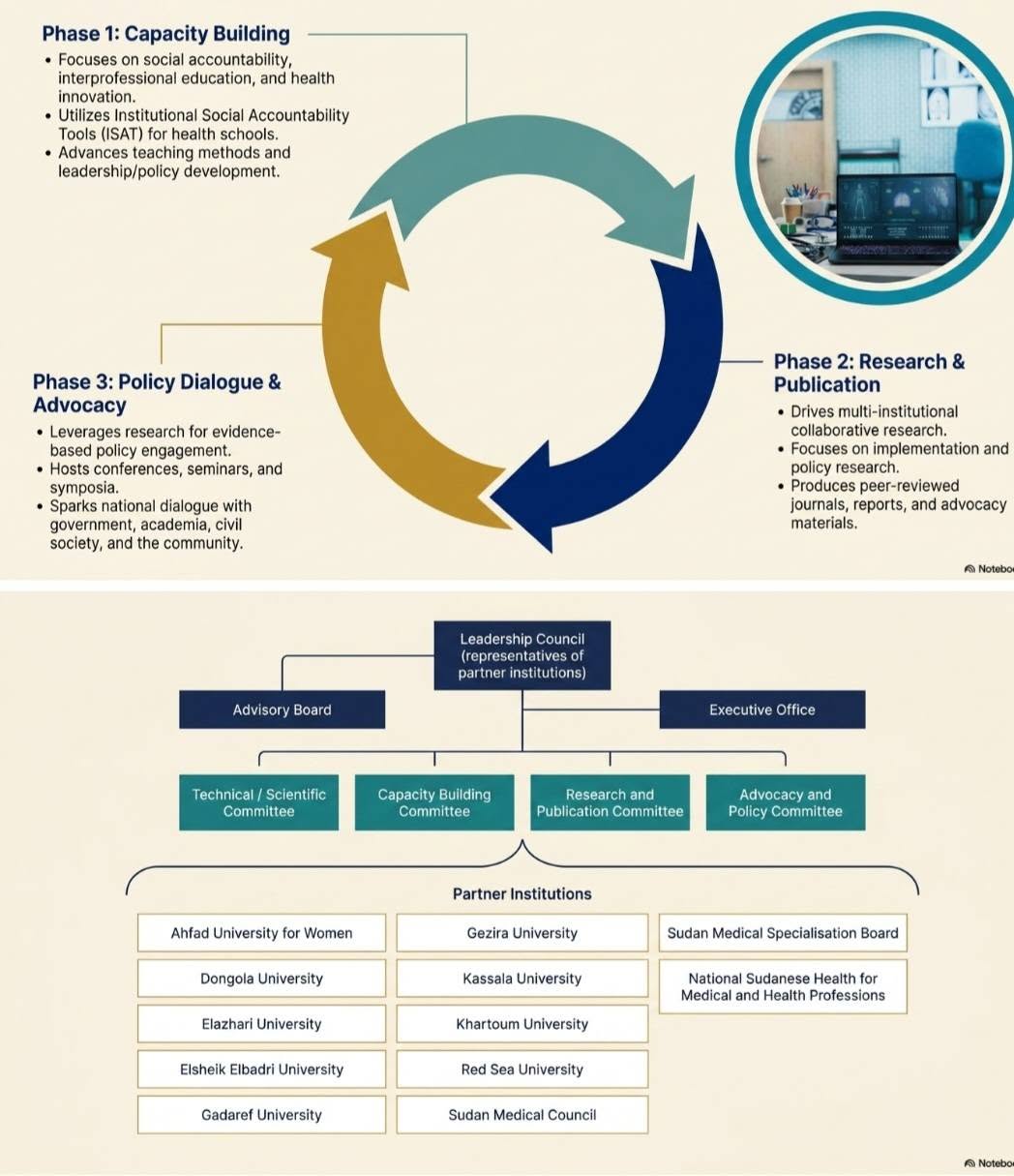
The inauguration was attended by representatives from the Center’s partner institutions, including Dongola University, Elazhari University, Elsheikh Elbadri University, the University of Gadaref, the University of Gezira, Kassala University, the University of Khartoum, Red Sea University, the National Sudanese Health Council for Medical and Health Professions, the Sudan Medical Council, and the Sudan Medical Specialisation Board.
The opening ceremony featured addresses by Professor Gasim Badri, President of Ahfad University for Women, and Dr. Durria Mansour Elhussein, Director of the Center. Additional remarks were delivered by representatives of partner universities, Mrs. Sulaina Sharif, State Minister for Human Resources and Social Welfare, Dr. Tabita Boutros, former Federal Minister of Health, as well as representatives from the Federal Ministry of Health, the World Health Organization (WHO) Sudan Country Office, and the WHO Eastern Mediterranean Regional Office.
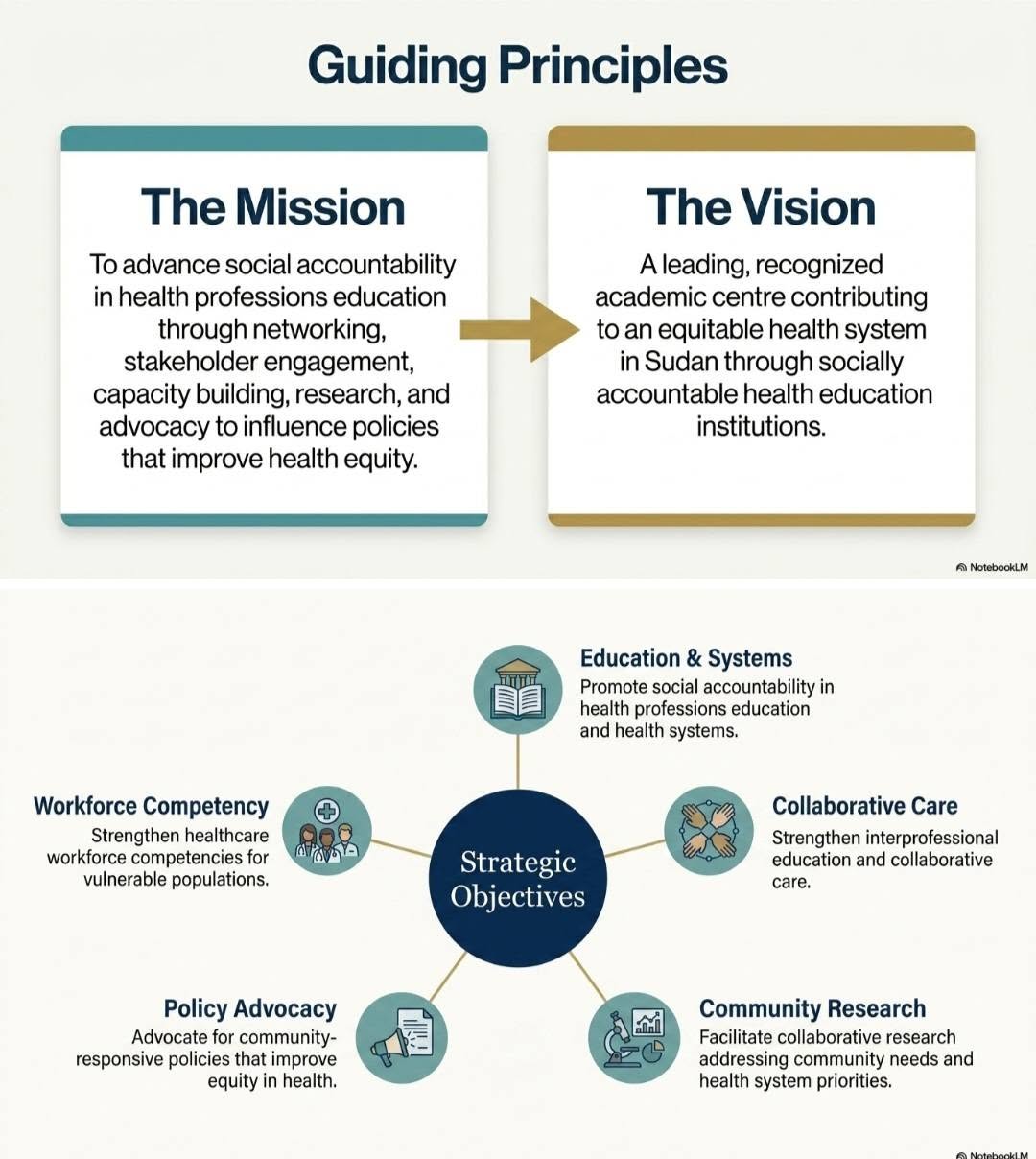
Participants emphasized the importance of establishing the Center at this critical time and highlighted its anticipated role in advancing social accountability in health professions education and research. Through capacity building, research, networking, and advocacy, the Center aims to contribute to stronger health systems and improved health and well-being for communities across Sudan and the region.