
School of Pharmacy
The School of Pharmacy is dedicated to preparing highly competent female pharmacists equipped with modern scientific knowledge and practical expertise. Through a five-year Bachelor of Pharmacy program, the School combines academic rigor with clinical exposure to ensure graduates are ready to meet evolving healthcare needs locally and internationally.

Pharmacy today is a dynamic and patient-centered profession that plays a vital role in improving healthcare systems and community wellbeing. At our School, we are committed to preparing competent, confident, and ethically grounded female pharmacists who are capable of responding to modern healthcare challenges. Through a balanced approach that integrates scientific knowledge, clinical training, research, and community engagement, we strive to equip our students with the skills necessary to excel in diverse professional settings. We take pride in fostering an academic environment built on excellence, integrity, collaboration, and innovation.
Amin Abdelrahim Elamin - Dean of School of Pharmacy
About
About the School
The School of Pharmacy at Ahfad University for Women is committed to advancing pharmaceutical education by integrating contemporary scientific developments with applied professional training. Recognizing the transformation of pharmacy practice from a product-oriented role to a patient-focused healthcare profession, the School continuously aligns its curriculum with global trends and community health priorities.
Its five-year Bachelor of Pharmacy (B.Pharm.) program provides comprehensive instruction in pharmaceutical sciences, clinical practice, and research. Students develop a strong foundation in scientific principles alongside hands-on laboratory work and structured clinical courses that enhance their professional competencies. Practical training is regarded as a vital bridge between academic study and professional registration, ensuring graduates are fully prepared to assume diverse roles within the pharmaceutical sector.
Operating under the semester system, the curriculum emphasizes both theoretical understanding and applied learning. The final stage of study includes an independent research project, fostering analytical thinking and evidence-based practice. Through a culture grounded in excellence, integrity, collaboration, and accountability, the School aspires to position itself as a regional leader in pharmacy education while contributing meaningfully to international pharmaceutical research and healthcare advancement.
Vision
The School of Pharmacy strives to be a leading higher education institute in its field of specialty within the whole region and is also poised to partake competitively in the international arena of pharmacy education and pharmaceutical research.
Mission
To adopt and provide a high level of contemporary methodologies in pharmaceutical studies and technical practices for the future female pharmacists to guarantee qualified and competitive graduates.
Objectives of the school
Since the profession of pharmacy is rapidly changing and the role of the pharmacist is extending much further than his/her dispensary and is becoming more patient–centered rather than only drug centered, pharmacy education must adapt to meet these changes. Consequently.
- The aim of the five-year Bachelor of Pharmacy (B. Pharm.) courses offered at the School of
Pharmacy at AUW is to produce graduates with a wide knowledge and understanding of the sciences, technologies and practices which substantiate pharmacy as a profession. - This knowledge, together with the clinical skills gained by the graduates in the eight clinical pharmacy courses taught at this school, will enable them to acquire the competencies suitable for their registration as pharmacists capable of building a career in any branch of the many branches of pharmacy.
- Any pre-registration practical training carried out by the student as part of her learning process is considered as an essential educational link between the undergraduate course and the graduate’s work as a registered pharmacist.
Staff

Amin Abdel Rahim Elamin
Ph.D, University of Uppsala, Sweden, 1994, Professor, Dean.
Abd Almoneim Osman Elkhalifa
Ph.D, University of Khartoum (1995), Professor.
Abd Elrahman Hassan Ishag
Ph.D, University of London, 1974, Professor.
Ahmed Al Nasri Hamza
Ph.D, University of Aberdeen, 1973, Professor.
Elsheikh Ali Elobeid
Ph.D, University of Khartoum, 1996, Professor.
Hassan. M.A. Hassan
PhD, University of London, England, 1972, Professor.

Khaldamirghani Hamza
Ph.D., University of Khartoum, 1990, Associate Professor.
Limea F. Ismyail
Ph.D, Azerbaijan National Academy of Science, Institute of Physiology, 2005, Associate Professor.
Sakina B. Elamin
Ph.D, University of Khartoum, 2010, Associate Professor.
Amani Abdelkarim Mohamed Kheir
Ph.D, Uppsala University, Sweden, , 2011, Assistant Professor.
Undergraduate Programs
Curriculum
The academic courses occupy five years of full-time study. This school will follow the semester system (two semesters per year) and, as the laws of the Ahfad University require, each semester will be treated separately in terms of the courses results. The second semester of the last year
will be devoted to a research project to be carried out by each student.
Each science course consists of two parts: theoretical and practical. The duration of the lecture is 50 minutes and each lecture is given the load of one credit hour. A laboratory practical, whether two or three hours, is considered one credit hour.
Each course is given:
• A course title.
• Course designation.
• A load in terms of credit hours.
As is clear from the course descriptions presented below, all the traditional disciplines of a pharmacy curriculum are offered. However, the policy of this school.
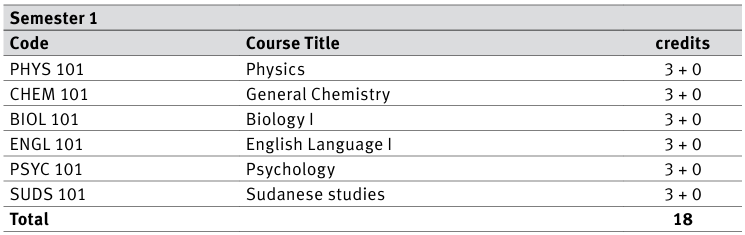
Semester 1
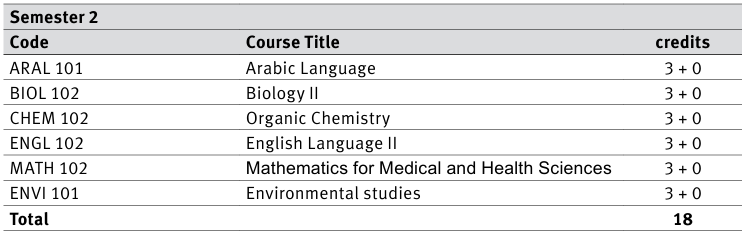
Semester 2
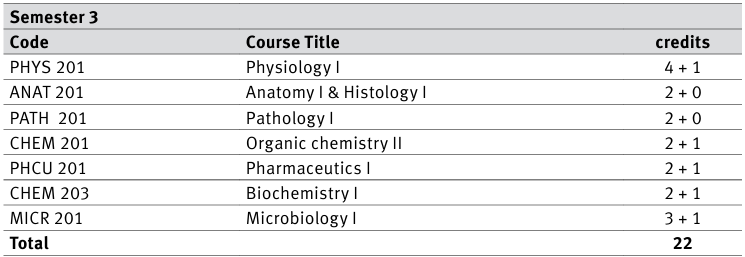
Semester 3
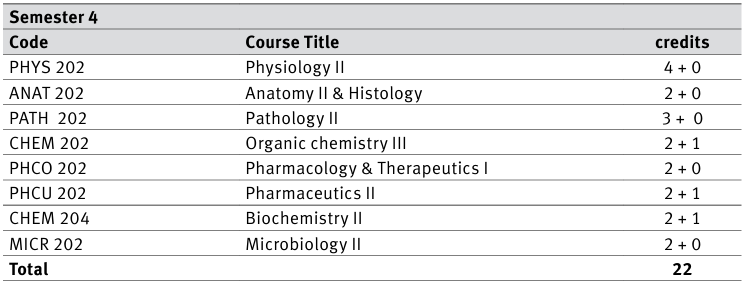
Semester 4
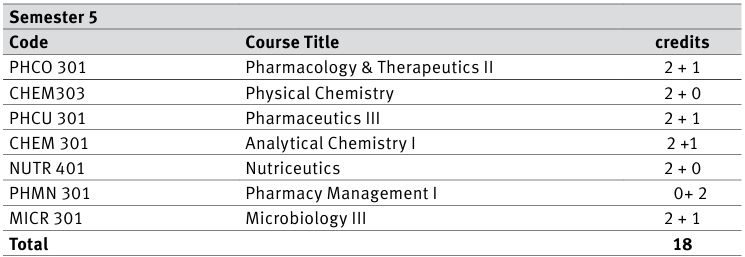
Semester 5
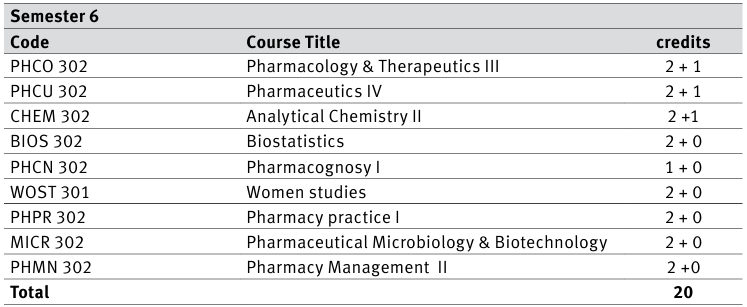
Semester 6
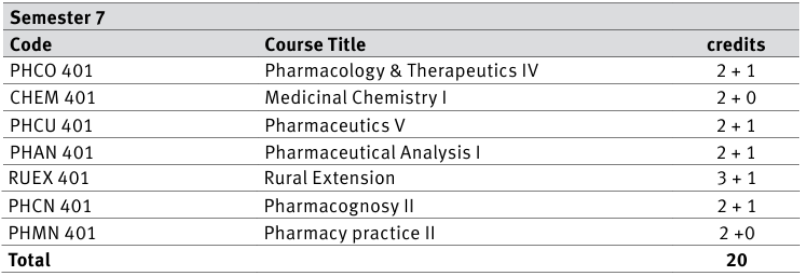
Semester 7
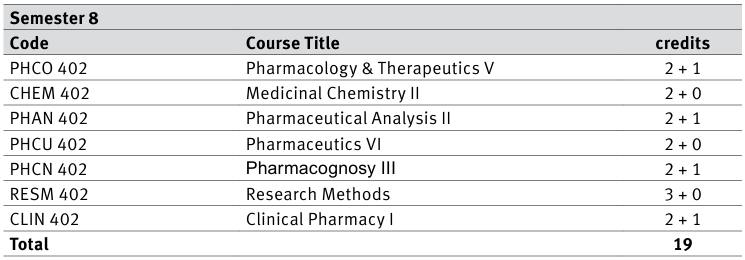
Semester 8
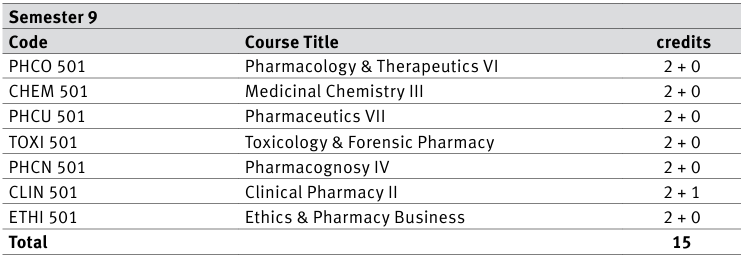
Semester 9
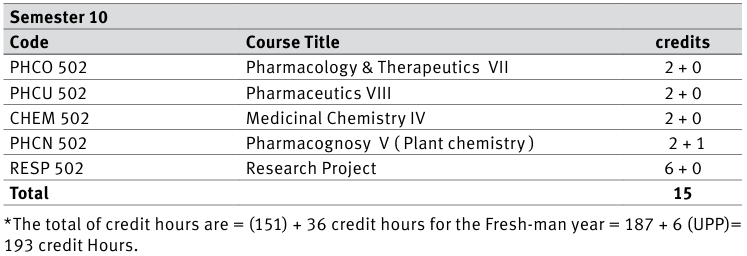
Semester 10
Course Descriptions
PHYS 201 Physiology I 4 cr.
This course deals with Cell Physiology, Body Fluids, Excitable Tissues and the Autonomic Nervous System, as well as the renal, respiratory and the gastrointestinal track and hematology.
ANAT 201 Anatomy I & Histology 2 cr.
By the end of this course the student should be able to demonstrate sufficient knowledge in the normal structure of the Autonomic Nervous System, as well as the renal, respiratory and the gastrointestinal track of macroscopic and microscopic level.
PATH 201 Pathology I (General) 2 cr.
The course covers: A etiology; Mechanism of cell injury; Disturbances of circulation, growth and metabolism; Degenerations, necrosis and gangrene; Inflammation, healing and repair; Hypersensitivity reactions; Neoplasia.
CHEM 201 Organic Chemistry II 3 cr.
This is the first of a two-semester sequence of organic chemistry. It includes an introduction to structure, stereochemistry, mechanism, reactivity, functional groups and synthesis.
PHCU 201 Pharmaceutics I 3 cr.
The course consist of theoretical and practical components designed to provide junior pharmacy student with back ground information about the profession of pharmacy, about terminology, history, role of pharmacist and information policies.
CHEM 203 Biochemistry I 3 cr.
The purpose of this course is to give an idea about bio-molecules, and to introduce the student to the importance, source, sites and structures of biochemical compounds. Also the courses focus on the enzyme mode of action and vitamins functions and deficiency diseases.
MICR 201 Microbiology I 4 cr.
General Microbiology serves as an introduction to the microbial world. Topics include Bacteriology and important bacterial infections, Viruses and viral infections, Fungi and important mycotic infections, Other microorganisms and infectious agents. The course includes laboratory sessions on basic microbiological techniques, Aseptic technique, isolation, and identification of microbes.
PHYS 202 Physiology II 4 cr.
This course deals with the physiology of the cardiovascular, endocrine reproductive systems. Prerequisite: PHYS 201.
ANAT 202 ANATOMY II & HISTOLOGY 2 cr.
At the end of this course, the student should be able to describe: the cardiovascular, endocrine reproductive, Musculoskeletal, sense organs and congenital Malformation systems.
PATH 202 Pathology II 3 cr.
This course deals with the pathology of the cardiovascular, endocrine and reproductive systems.
CHEM 202 Organic Chemistry III 3 cr.
This is the second course in a two-semester sequence of organic chemistry. Topics include an in-depth study of reaction mechanisms, functional group transformations and the synthesis of moderately complex molecules by multi-step strategies. Emphasis is given to naturally
occurring compounds and pharmaceuticals.
MICR 202 Microbiology I 3 cr.
General Microbiology serves as an introduction to the microbial world. Topics include the basic biology of bacteria, viruses, and fungi with emphasis on the control of microorganisms. An integral part of the course is the laboratory in which students will gain hands-on knowledge of
aseptic technique, isolation, and identification of microbes.
PHCO 202 Pharmacology and therapeutics I 2 cr.
The course only consists of theoretical part and is designed to provide the basic knowledge of pharmacology such as pharmacology related terms and drug development, pharmacokinetics and pharmacodynamics of drug in addition to drugs acting on cholinergic system. Prerequisite: PHYS 201.
PHCU 202 Pharmaceutics II 3 cr.
The course is composed of theoretical and practical components designed to introduce the student to the different dosage forms and the routes of administration.
CHEM 204 Biochemistry II 3 cr.
The aim of this course is to illustrate the degradation and biosynthesis of biochemical compounds inside animal and human tissues. It also covers the movement of the metabolites from site to another, beside calculation of the energy produced or consumed through different
pathways. Prerequisite: CHEM 203.
MICR 202 Microbiology II 2 cr.
This course covers the following: Fundamental principles of Immunology, Vaccination and Immunization, Principles of Parasitology and parasitic diseases with special emphasis to infections in Sudan. The course include sessions on demonstrations of slides on morphological
study of different types of parasites. Prerequisite: MIRC 201.
MICR 301 Pharmaceutical Microbiology 1II 3 cr.
This course focuses on control of infectious microorganisms. Topics include the following: Infection control and healthcare associated infections. Relevance and importance in Pharmacy, Principles of Sterilization and Disinfection in Healthcare, The Selection and use of antimicrobial agents, Antimicrobial Resistance, and Antibiotic Stewardship.
PHCO 301 Pharmacology and therapeutics II 2 cr.
The course consists of theoretical and practical part and designed to provide knowledge about drugs acting on adrenergic system, autacoids and their role and drugs manage renal system disorders as diuretics. The practical part focuses on the effect of cholinergic and adrenergic
drugs in vitro. Prerequisite: PHCO 202.
CHEM 303 Physical Chemistry 2 cr.
The course consists only of a theoretical part. The course introduces the student to the concept of quantum mechanical world of the atom, thermodynamics and its application to pharmaceutical systems, chemical kinetics and the stability of molecules.
PHCU 301 Pharmaceutics III 3 cr.
This course consists of theoretical and practical parts which are complementary to each other and is designed to provide students with the skills need to perform any pharmaceutical calculations. Prerequisite: PHCU 202.
CHEM 301 Analytical chemistry I 3 cr.
This course is designed to make the students familiar with more sophisticated techniques used in chemical analysis both manual and instrumental, and also to give more information about certain chemical phenomena such as precipitation and complex formation.
RUEX 401 Rural Extension 4 cr.
The purpose of this course is to provide the students with knowledge, skills and techniques essential for Extension and Rural Development workers. Special attention is given to basic concepts of development and change, extension, diffusion and adoption as well as communication. The course also gives special consideration to reproductive health issues as well as current problems of rural development. Refer to the university general courses.
PHPR 301 Pharmacy Practice I 2 cr.
The course consists of theoretical and practical components, designed to outline the role of the pharmacist in the health care system particularly the recent development in the services provided by the pharmacist including the need for lifelong learning. The tools needed such as social and behavioral aspects and the importance of communication skills are thoroughly discussed and explained.
MICR 302 Pharmaceutical Microbiology IV 2 cr.
The course is an introduction to the manufacturing of drugs from microorganisms. Sterile Pharmaceutical Products, Principles of Good Manufacturing Practice, The Manufacture and Quality Control of Immunological Products, and Recombinant DNA Technology. Pharmaceutical Products.
PHCO302 Pharmacology and therapeutics III 2cr.
The course consists of complimentary theoretical and practical parts; it is designed to provide knowledge in the cardiovascular system: drugs therapy for heart failure, antiarrhythmic, antianginal and antihypertensive, in addition to the drugs that act on blood disorders such as antianemic, anti-thrombotic and thrombolytic and anti hyperlipidemics. Prerequisite: PHCO 301.
PHCU 302 Pharmaceutics IV 2 cr.
This course consists of complimentary theoretical and practical parts. This course is designed to provide students with introduction to the surface and interfacial phenomena’s, adsorption, rheology, colloids and disperse systems, solutions of non-electrolytes, the theory of strong electrolytes, ionic equilibria, buffer and ionic solutions, solubility and distribution phenomena.
CHEM302 Analytical chemistry II 3 cr.
By the end of the course the student should be familiar and fully aware of the theoretical and practical concepts concerning the analytical separation such as solvent extractions, precipitation, making agents and Ion exchange separation. Prerequisite: CHEM 301.
BIOS302 Biostatistics 2 cr.
The course outlines the definition of data, knowledge, information and wisdom. It also outlines probability and normal distribution, types of data, quantitative graphics and types of graph used in research.
PHCN 302 Pharmacognosy I 3 cr.
The course gives general introduction to Pharmacognosy, binomial nomenclature, and active ingredients in plants and factors affecting it.
WOST 302 Women studies 2 cr.
The purpose of this course is to make students gain self-actualization through raising their awareness regarding their situation and their status in society, to enable students to look critically at their roles in the society, to build their analytical capacities so as to be effective
agents for change and development, and to provide the student with knowledge of feminism and Women’s Movements as tools for promotion of women’s condition and positions to achieve empowerment and solidarity for action.
PHPR 302 Pharmacy Practice II 2 cr.
The course consists of complimentary theoretical and practical components, designed to outline the role of the pharmacist in the health care system particularly the recent development in the services provided by the pharmacist including the need for lifelong learning. The tools needed such as social and behavioral aspects and the importance of communication skills are thoroughly discussed and explained.
PHCO401 Pharmacology and therapeutics IV 3 cr.
The course consists of theoretical and practical part designed to provide knowledge on respiratory system as anti-asthmatic, anti-cough, allergic rhinitis and COPD drugs. The second part focus on drugs act on central nervous system as neurotransmitters, anti epileptics, anaesthetics, anti-Parkinson, anti-psychotics and depressants.
CHEM401 Medicinal Chemistry I 2 cr.
Introduction to the discipline and its application in drug development. Fundamentals of Pharmaceutical Chemistry. Physiochemical properties and their effect on drug activity. Drug receptor interaction/ stereochemistry. Structure activity relationship and Quantitative structure activity relationship. Drug metabolism/biotransformation. Application of the principles of pharmaceutical chemistry on Anti-inflammatory drugs; steroids and nonsteroidal anti-inflammatory drugs (NSAID’s).
PHCU401 Pharmaceutics V 3 cr.
This course consists of theoretical and practical parts. The course is designed to provide the students with the concepts and practice of the different industrial processes related to manufacture of pharmaceuticals. The students will be introduced to the concepts of heat
transfer, heating, milling, mixing, drying and moisture content, granulation.
PHAN 401 Pharmaceutical Analysis I 3 cr.
This course is designed to cover the regions of electromagnetic radiation and their uses. Application of UV, IR, NMR, MS & spectroflurometry in structure elucidation of organic molecules and pharmaceuticals. As well as the application of GC and HPLC in separation, purification and
quality control analysis of organic compounds and pharmaceuticals.
MICR 401 Microbiology III 2 cr.
The course is an introduction to immunology where students learn about the human immune system. Students will learn the events constituting the specific immune response, antigen antibody reaction, autoimmune diseases, and types of hypersensitivity.
NUTR 401 Nutriceutics 2 cr.
The course cover the basic nutrition principles important for a pharmacist. It covers nutrition assessment and diet, paediatrics, pregnancy and lactation, infants, elderly and requirements is specific disease state. The course include a critical review and determination of patient
requirements in parenteral feeding in addition to understanding nutrition facts and label and drug-nutrients interactions.
PHCN401 Pharmacognosy II 3 cr.
This course describe in detail the different parts of plant including root, seeds, leaves, fruits, flowers. It also gives overview bout animal derived drugs. Prerequisite: PHCN 302.
PHCO402 Pharmacology and therapeutics V 3 cr.
The course consists of a theoretical part & a practical one. The course is designed to provide students with the basic knowledge of drugs used to treat disorders of the digestive and the endocrine systems. The course also covers non-steroidal anti-inflammatory drugs (NSAIDs).
CHEM402 Medicinal chemistry II 2 cr.
The course discusses the fundamentals of medicinal chemistry of drugs acting on CNS and on endocrine systems. It highlights desired chemical feature of each group and its relevance to pharmacological profile in addition to the synthesis and biotransformation of each group. Prerequisite: CHEM 401.
PHAN402 Pharmaceutical Analysis II 3 cr.
The course cover pharmaceutical and biomedical analysis such as radiopharmaceutical analysis (measurement of radioactivity and it quality control) and drug analysis (narcotics and dangerous drugs by thin layer and gas chromatography). Prerequisite: PHCN 401.
PHCU402 Pharmaceutics VI 2 cr.
The course consists of theoretical component designed to provide student detailed knowledge of parenteral products, sterile products manufacturing areas and clean rooms classification, Water for injection production and storage. Prerequisite: PHCU 401.
PHCN402 Pharmacognosy III 3 cr.
The course gives in detail methods of extraction of active ingredients from plants, isolation techniques, different types of chromatography, and its application in different pharmaceutical aspects. Prerequisite: PHCN 401.
BIOT402 Pharmaceutical Microbiology & Biotechnology
The course consists of a theoretical part and practical part which are complementary to each other. The course is designed to provide the students with the essential knowledge of molecular biotechnology. Prerequisite: MICR 301.
RESM402 Research Method 2 cr.
Refer to the university general courses.
PHCO 501 Pharmacology and therapeutics VI 2 cr.
The course consists only of a theoretical part. The course is designed to provide students with the basic knowledge of chemotherapeutic drugs used to treat various infective and neoplastic diseases.
CHEM501 Medicinal chemistry III 2 cr.
The course discusses chemistry of drugs acting on cardiovascular system and on autonomic nervous system. It highlights the desired chemical features, its relevance to pharmacological profile and biotransformation of each group. The other component of this course discusses drug discovery, development and design including prodrug design. Prerequisite: CHEM 402.
TOXI501 Toxicology & Forensic Pharmacy 2 cr.
This course outlines the definition of forensic pharmacy and issues concerning forensic pharmacist. It also gives overview about narcotic drugs and their abuse, toxicity by hair dye and heavy metals and antidoping drugs.
PHCN501 Pharmacognosy IV 2 cr.
The purpose of this course is to define and classify secondary metabolites, understand physical and chemical characters, actions and structure activity relationship of secondary metabolites, to study the basic secondary metabolic pathway, and to be to be acquainted with biosynthesis Classification of Terpenoids and its biological importance and Chemical structures of volatile oils and its biological importance.
PHCU501 pharmaceutics VII 2 cr.
This course consists of a theoretical designed to provide the students with the general principles of pharmacokinetics and biopharmaceutics, determine the bioavailability of the drug in the dosage form after administration. This course contains the extra-vascular and GIT drug administration, factors influencing drug absorption.
CLIN501 Clinical Pharmacy I 3 cr.
The course consists of theoretical and practice (hospital rounds) complementary to each other. The course is designed to familiarize students with role of pharmacist in management of disorders related to cardiovascular, endocrine & renal system.
ETHI 501 Ethics& pharmacy business
The course consists of theoretical component to provide senior pharmacy students with detailed knowledge about ethics of pharmacy provision and laws that regulate the profession with special emphasis in laws in Sudan, in addition to licences encounter pharmacy practice in
Sudan.
PHMN501 Pharmacy Management I 2 cr.
This course includes pharmacy management principles, financial & human resource management.
PHCO502 Pharmacology and therapeutics VII 2 cr.
The course consists only of a theoretical part. The course is designed to provide students with the basic knowledge of Immuno-pharmacology. The course also covers special topics in various areas of Pharmacology and therapeutics.
PHCU502 pharmaceutics VIII
This course consists of a theoretical part designed to provide the students with the general principles of pharmacokinetics and biopharmaceutics, determine the bioavailability of the drug in the dosage form after administration. This course contains the extra-vascular and GIT drug administration, factors influencing drug absorption. Prerequisite: PHCU 501.
CHEM502 Pharmaceutical Chemistry IV 2 cr.
This course discusses the chemistry of chemotherapeutic antimicrobial agents, these include antibiotics, antimicrobial, antivirals, antiprotozoal and antifungals. It highlights desired chemical feature of each group relevance to pharmacological profile and biotransformation of each group. The second component discusses the chemistry of cytotoxic agents used in cancer chemotherapy.
PHCN502 Pharmacognosy V (Plant Chemistry) 2 cr.
The course studies the chemical structures of Phenolic compounds (Tannins, Flavonoids, anthocynines, coumarin…), glycosides, saponins and alkaloids.
CLIN 502 Clinical Pharmacy II 3 cr.
The course consists of theoretical and hospital rounds complementary to each other delivered through a problem based learning approach. The course is designed to provide management of disorders related to cardiovascular, general nervous system & respiratory system.
PHMN502 Pharmacy Management II 2 cr.
This course studies drug supply management and total quality management including Quality assurance principles. Prerequisite: PHMN 501.
RESP502 Research Project 6cr.
Refer to the university general courses.
Graduation Requirements
Graduation Requirements
Postgraduate Programs
Master of Pharmaceutical Biotechnology
Mission
To integrate knowledge and skills of pharmaceutical biotechnology among pharmacists for quality and evidence based drugs and vaccines development.
Vision
To graduate high-level experts in identifying, characterizing and manufacturing biopharmaceutical products.
Admission
July of each year.
Admission Requirements
- This follows the Admission requirements set by the School of Graduate Studies and approved by the University Academic Council.
- Specific requirement is the applicant should hold an honour Bachelor Degree from AUW or an equivalent degree from another recognized institution in Pharmacy with minimum grade Good otherwise completion of Higher Diploma or Qualifying Year.
Degree Requirements / Curriculum Outline
Semester one
Semester Two
Semester Three
Semester Four

Course Descriptions
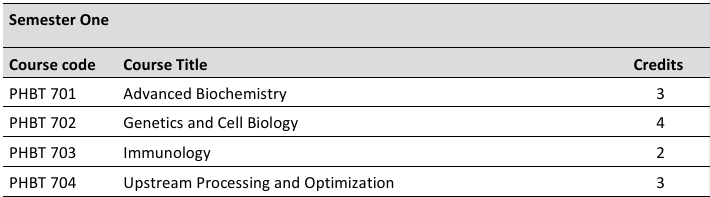
PHBT 701 Advanced Biochemistry 3 cr.
The course provides students with in depth of knowledge in the different aspects of cell biology, and the techniques of biochemistry and molecular biology that underpin the developments of molecular sciences and biotechnology. It deals with complex biochemical processes involving the interaction of numerous classes of biomolecules.
PHBT 702 Genetics and cell biology 4 cr.
This course provides knowledge and understanding of basic genetics and molecular biology. It examines advanced aspects of genetics and inheritance at a phenotypic, population and molecular level. It also provides basic skills on molecular biology techniques.
PHBT 703 Immunology 2 cr.
This course provides basic knowledge of the immune system and its involvement in health and disease. The course includes an overview and elements of the immune system. The course emphasizes the medical applications of immunology specifically immuprophylaxis as well as the adverse immune responses and immunology of Cancer.
PHBT 704 Upstream Processing and Optimization 3cr.
The course is designed to meet industry growing demand for personnel with expertise on basic concepts of bioprocess technology. The knowledge of bioreactor operations, fermentation process and their industrial applications, the students study some important industrial microorganisms, their growth conditions and cultivation and their products used in biotechnology. Also it will provide the student with the knowledge and technical skills for monitoring, control and optimizing of fermentation process.
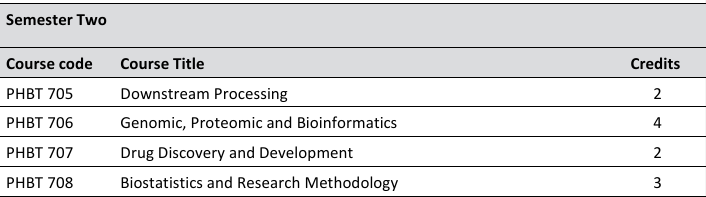
PHBT 705 School of Pharmacy Downstream Processing 2 cr.
The course provides students with an advanced integrated knowledge of the basic concepts of downstream processing, equipment and design parameters, the scale-up of the parameters. Foundations of protein purification and the challenges in prevention or elimination of contaminants.
Also the knowledge on process integration: Strain development, up- and downstream processing. And the basics of technical/industrial purification of proteins. Know how to plan and perform the purification of a target protein from biomass.
PHBT 706 Genomics, Proteomics and Bioinformatics 4 cr.
Genomics, proteomics and bioinformatics are the cornerstones of the so-called ‘Omics technologies that are routinely applied in medical research and throughout the drug-development process. The course introduces students to genomes, proteomes and databases that store various data about genes, proteins, genomes and proteomes. The course offers basic knowledge of genome sequencing, major differences between prokaryotic and eukaryotic genomes, basic proteomics and its applications. Students will gain skills in applied bioinformatics, comparative, evolutionary, human genomics and functional genomics beside get oriented to basic proteomic techniques.
PHBT707 Drug discovery and development 2 cr.
This course introduces the students to the subject of drug target identification and validation. How compounds are identified, selected & developed into drug products. Methods for screening, drug design, Hits to Leads, lead development, assay cascade, drug candidate selection, clinical trials, toxicological testing, spin-off & large pharmaceutical companies, role of regulatory bodies.
PHBT 708 Biostatistics and research methodology 3 cr.
The biostatistics course of contains both descriptive and infererial statistics the first part is an introductory topic to acquaint the students with the basic descriptive statistical principles which are used in the decision making process. The second part is the infereial statistics which is an advanced topic in statistics to enable the student to infer data on the population on the basis of sampling.
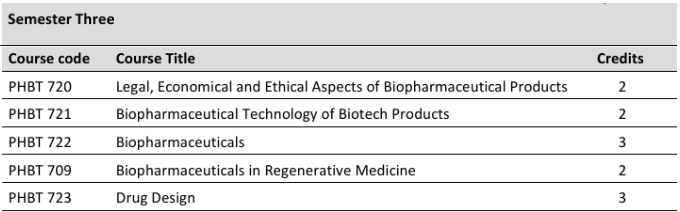
PHBT720 Legal and economical and ethical aspect of Biopharmaceutical products 2 cr.
The course provides students with knowledge to know drug quality requirements, pre-requisites and activities ,the basic of the European drug quality system ,Connection of the European system with international regulations, differences and overlaps , Knowledge of basic concepts for GMP and on differences between European and US regulations – Knowledge of the basic concepts of : Strategic & business planning (corporate, marketing, financial, R&D) ,value assessment of developmental projects and intellectual properties with simple standard methods , portfolio strategy , structuring cooperation agreements , patent assessment and trading intellectual properties (licensing) and ethical aspect related to of biopharmaceutical products.
PHBT721 Biopharmaceutical technology of biotech products 2 cr.
The course provide student with the Knowledge of formulation principles for biotech products – Challenges of protein formulations ,formulation processes and ingredients, parenteral controlled release formulations drug delivery mechanisms and kinetics , the general approach for rat control delivery site specific delivery of biotech products, Successful examples of pharmaceutical products.
PHBT722 Biopharmaceuticals 3 cr.
The course provides the students with an introductory knowledge of the field of biotechnology generally and specifically the applied field of biotechnology based drugs such as Basic knowledge about production/ selection /characterization and mechanisms of action of therapeutic antibodies. Knowledge about principles of vaccine development and different types of vaccine. Structure, preparation, quality control and biological requirements of therapeutic DNA, the different methods that use for gene transfer.
PHBT709 Biopharmaceuticals in regenerative medicine 2 cr.
Knowledge on the application of Biopharmaceuticals in regenerative medicine clarification of terms and definitions , Selection and manipulation of cells General techniques to embed or attach biopharmaceuticals to carriers or their single application , Preparation of carriers and scaffolds ,Effects of biopharmaceuticals on mammalian cells and whole organism, Adverse reactions of organism on carriers and biopharmaceuticals and selected examples of biopharmaceutical application in regenerative medicine.
PHBT723 Drug Design 3cr.
The course instructors will present an overview of approaches for both ligand and target discovery such as similarity searching, pharmacophore modelling, QSAR, structure-based drug design (docking and scoring), virtual screening, ADMET property prediction, Knowledge-based protein modelling and structural genomics as well as relevant elements of bioinformatics (DNA and protein sequence and structure analysis).
PHBT799 Thesis 6cr.
A research topic will be conducted by the candidate student in the area of biotechnology relevant to Pharmacy. The students are required to present, their research proposal in a seminar, attended by members of staff of the school and graduate students. The students are encouraged to publish their research findings in an indexed Journal.
Doctor of Philosophy in Pharmacy
Introduction
The PhD program in Pharmacy was launched in July 2012. It is solely research-based covering all aspects of the design and use of drugs and medicines. These include drug discovery, formulation, delivery, immunology, infection and immunity and pharmacy practice. Study in these areas provides the chance to experience research that is directly relevant to some of today’s major challenges in healthcare and the pharmaceutical industry.
Degree Requirements