
School of Health Science
School of Health Sciences established in 1966, the school vision is to continue being pioneers in preparing committed female leaders capable of enhancing health services and education to promote the quality of life of Sudanese people and those in the region.
The school of Health Sciences is an institution dedicated to training women into becoming health practitioners. It provides a premier academic experience through instructions in Nutrition and Dietetics, Public Health and Physiotherapy in an integrated, relevant, and comprehensible manner that can be applied in practical settings.
The vision of the school of Health Sciences is to excel in education, research, ethics, and community services. This vision is achieved through imparting knowledge and competencies that contribute to improving people’s well-being. The school equips learners with innovative approaches to addressing health challenges, enabling them to improve the quality of life in their communities and beyond. Enrolling in the School of Health Sciences means joining a distinguished academic community dedicated to improving lives and advancing equitable, sustainable health systems that uphold the highest standards of social accountability.
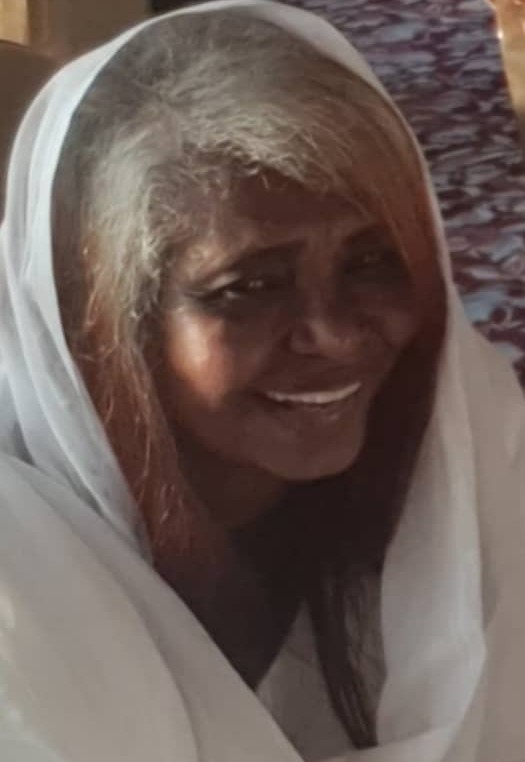
Dr. Faiza Hussein - Dean of School of Health Science
About
Historical Background
The School of Health Sciences evolved from the School of Family Sciences, the established School (1966) in Ahfad University College for Women, later promoted to Ahfad University for Women (AUW). The culture of family sciences has been incorporated in the new School of Health Sciences. This aligns the view of expanding to include other applied fields of Health Sciences which are of vital interest to the Sudanese community. However, education in health sciences shares a three-fold interest on international, regional and national levels.
The present School of Health Sciences was launched in 2006, based on the former School of Family Sciences, after four decades of graduating family scientists. The School offers a B.Sc. Honors degree in different disciplines of Health Sciences and offers postgraduate programmes leading to the award of Postgraduate Diploma in Teaching Family Sciences and Diploma in Diabetes Education, also M.Sc. in Nutrition and Dietetics and, PhD in the fields of nutrition, dietetics, public health and physiotherapy.
Mission
Provide the necessary environment for excellence in teaching, research, and community services within a multicultural environment and interdisciplinary approach. To generate qualified competent professionals in Human Nutrition and Dietetics, Public Health and Physiotherapy for the wellbeing of individuals, families, and communities.
Vision
Preparing/ availing committed women as agents of change capable of enhancing health services that promote the quality of life at national and regional levels.
Academic Programs
The School is presently focusing on implementing four academic programs in the following specializations:
• Nutrition and Dietetics
• Public Health
• Physiotherapy
The enrolled students will get B.Sc. Honors in Health Sciences with different majors. The earmarking of the students will be after the freshman year.
Admission into any major depends on academic performance, available places and student preference.
Staff
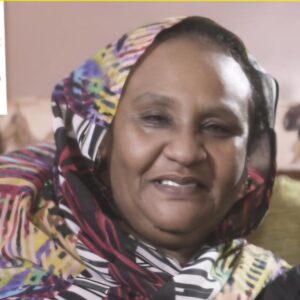
Dr. Faiza Hussein Abdalla Osman
Dr. Faiza Hussein Abdalla Osman is the Dean of the School of Health Sciences at Ahfad University for Women and an Assistant Professor of Zoology. She has more than four decades of experience in academic teaching, research, and university administration. Dr. Faiza holds BSc, MSc, and PhD degrees in Zoology from the University of Khartoum, as well as a Higher Diploma in Human Rights and Humanitarian Law. She has contributed significantly to academic development and research supervision and has served in several leadership roles within the university. Her work also includes consultancy with national and international organizations in environmental health, education, and women’s rights.
Email: drfaizahussein@yahoo.com
WhatsApp: +249128084566
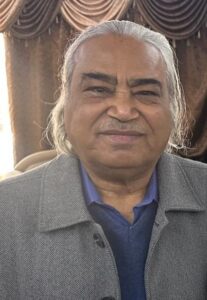
Prof. Abdelhalim Rahama Ahmed
Professor AbdelHalim Rahama Ahmed Gubara is a senior academic in Food Science and Nutrition with extensive experience in teaching, research, and consultancy. He holds a BSc in Food Science from Cairo University, an MSc in Food Quality Assurance from the University of Reading, and a PhD in Protein Chemistry from the University of Mysore. He has served as Director of the Food Research Center and has been affiliated with Ahfad University for Women since 2009. His work focuses on food standards, nutrition, and food quality systems. He has also contributed to nutrition rehabilitation initiatives during humanitarian crises in Sudan.
Email: aragahmed@gmail.com
WhatsApp: +249912930517

Professor Mohamed Zaien
Professor Mohamed Zaien is a distinguished scholar in Food Science and Nutrition at the Nutrition Centre for Training and Research, School of Health Sciences at Ahfad University for Women. He holds BSc and MSc degrees from the University of Khartoum and a PhD from the University of Reading, UK. His expertise includes food microbiology, fermentation biotechnology, and functional foods. He has conducted extensive applied research, including studies on gum Arabic as a prebiotic in fermentation processes. Professor Zaien has contributed to curriculum development in several universities and has published more than 25 peer-reviewed scientific papers.
Prof.Ahmed Mohamed Ali Ismaeil
Professor Ahmed Mohamed Ali Ismail is a scholar in plant sciences with a long academic career in teaching and research. He obtained his BSc in Botany from the University of Khartoum and later completed his PhD at the University of North Wales, Bangor, UK. He served as a lecturer at the University of Khartoum before spending two decades teaching at the University of Qatar. His research contributions include studies in plant biology and human and plant nutrition. He has published more than 55 scientific papers and authored books on seed germination and literature.
Prof. Osama Awad Salih
Professor Osama Awad Salih is a leading expert in human nutrition with extensive experience in teaching, research, and policy development. He holds a PhD in Agricultural Biochemistry from the University of Khartoum and has served as Dean of the School of Health Sciences at Ahfad University for Women. His work includes developing national nutrition policies and collaborating with international organizations such as UNICEF, WHO, and FAO. He has taught both undergraduate and postgraduate courses and supervised numerous graduate students. Professor Salih has also established major training centers to strengthen national nutrition capacity.
Prof. Nafisa Mohamed Badri
Professor Nafisa Bedri is an internationally recognized scholar and advocate in gender and reproductive health. Her work focuses on gender-based violence, reproductive rights, policy communication, and women’s empowerment. She has led numerous research projects and collaborated with international organizations including WHO, UNFPA, UNICEF, and UNAIDS. She founded the Gender and Reproductive Health & Rights Resource Centre at Ahfad University for Women, the first national center dedicated to these issues in Sudan. Professor Bedri is also a member of several regional and global research networks.
Email: nmbedri@gmail.com
Phone: +201015738435

Dr. Manal Abdeen Mohamed Ali
Dr. Manal Abdeen Mohamed Ali is an Associate Professor of Nutrition and Dietetics at the School of Health Sciences, Ahfad University for Women. She holds a PhD in Human Nutrition from AUW and specialized diplomas in clinical nutrition and food safety. Dr. Manal previously served as Dean of the School of Health Sciences and Director of the Nutrition and Health Centre for Training and Research. She teaches undergraduate and postgraduate courses and has served as an examiner for numerous academic theses. Her work includes curriculum development, nutrition research, and participation in international health initiatives. She has also served as a consultant for the development of Sudan’s Food Composition Tables.
Email: manal.abdin@gmail.com
Phone / WhatsApp: +249912746540 / +201029543118
Prof. Ahmed Babiker Mohammed Ahmed
Professor Ahmed Babiker Mohammed Ahmed is a professor of parasitology in the Public Health specialization at the School of Health Sciences, Ahfad University for Women. He holds BSc, MSc, and PhD degrees in Zoology (Parasitology) from the University of Khartoum. His academic career includes extensive teaching in parasitology, research methods, vector control, and related public health disciplines. He has received specialized training in epidemiology, vector control, and biostatistics in Germany, Denmark, the United Kingdom, and the United States. He previously served as Principal of the National Centre for Research in Sudan and currently contributes to research management and academic leadership. He has supervised numerous MSc and PhD students and published more than 50 scientific papers.
Email: ahmedbabikeroa@gmail.com
Phone: +249912602630 / +249929330336
Prof. Somiya Gutbi Salim Mohamed
Professor Somiya Gutbi Salim Mohamed is a senior academic in nutrition and health with more than 25 years of experience in university teaching, research, and postgraduate supervision. She holds a PhD in Nutrition and Health from the University of Juba and an MSc in Human Nutrition and Dietetics from Ahfad University for Women. She has served as a faculty member at AUW and has supervised numerous undergraduate and postgraduate research projects. Her expertise includes medical nutrition therapy, clinical nutrition care, and public nutrition practice. Professor Somiya currently coordinates the Clinical Nutrition and Dietetics Master’s Program at the University of Science and Technology in Aden, Yemen. She has also held leadership roles such as Head of the Public Health Department at the University of Bahri.
Dr. Omeima Salih Mohammed Salih
Dr. Omeima Salih Mohammed Salih is an Associate Professor of Molecular Biology and currently serves as Vice President for Academic Affairs. She obtained her PhD in Molecular Biology from Universiti Putra Malaysia. With over two decades of experience in teaching and research, she has instructed undergraduate and postgraduate students in molecular biology, genomics, bioinformatics, and microbial genetics. She has supervised numerous student research projects in molecular biology and related fields. Her research interests focus on antimicrobial resistance and molecular mechanisms associated with infectious diseases. Dr. Omeima continues to contribute to strengthening academic programs and research capacity at Ahfad University for Women.
Dr. Durria Mansour Elhussein
Dr. Durria Mansour Elhussein is an Associate Professor of Parasitology with more than three decades of experience in academic teaching, research, and administration. She holds BSc, MSc, and PhD degrees in Zoology from the University of Khartoum. She currently serves as Director of the Research and Grants Unit at Ahfad University for Women. Her research focuses on parasitic diseases including leishmaniasis, schistosomiasis, toxoplasmosis, and gastrointestinal infections. Dr. Durria contributed to establishing the Ahfad Biomedical Research Laboratory and has led several research projects funded by international organizations. She has published more than 20 articles and contributed to several scientific books.
Email: Durriaelhussein@gmail.com
Dr. Sumaia Mohamed Elsayed Abdurrahman
Dr. Sumaia Mohamed Elsayed Abdurrahman is an Associate Professor specializing in environmental and public health. She earned her PhD in Zoology from the University of Khartoum and an MSc in Applied Entomology from Imperial College, University of London. Her academic work includes teaching, research, and community training on environmental health issues. She has conducted public awareness and outreach programs addressing environmental protection, climate change, and public health. Dr. Sumaia is also involved in gender and environmental advocacy initiatives and contributes to national and international environmental networks. Her research interests focus on health systems, climate change, and gender–environment interactions.
Dr. Mayada Faisal Adam Ebrahim
Dr. Mayada Faisal Adam Ebrahim is an Assistant Professor of Nutrition and Dietetics at Ahfad University for Women. She holds a PhD in Nutrition and Dietetics from the University of Khartoum and has been a faculty member since 2015. Her academic work includes teaching, research supervision, curriculum development, and clinical nutrition training. She coordinates postgraduate activities in the Department of Nutrition and Dietetics and founded the Ahfad Nutrition and Dietetics Society. Dr. Mayada also contributes to national initiatives related to nutrition policy and emergency nutrition protocols. Her research interests include clinical nutrition, community nutrition, and evidence-based nutrition practice.
Dr. Hassan Mubarak Hassan Abdelnour
Dr. Hassan Mubarak Hassan Abdelnour is an Assistant Professor specializing in disability and rehabilitation sciences. He holds a PhD in Physiotherapy from the University of the Western Cape in South Africa. His academic career includes teaching at several universities including Ahfad University for Women, Ibn Sina University, Al-Neelain University, and Jerash University in Jordan. He has supervised numerous undergraduate and postgraduate research projects and participated in curriculum development in physiotherapy and rehabilitation sciences. Dr. Hassan is also an active researcher and has contributed to international conferences and professional training programs in physiotherapy.
Email: hasphysio@gmail.com
Phone / WhatsApp: +962796579166 / +96275152648
Roua Hamid Aldaw
Roua Hamid Aldaw is a Lecturer in Human Nutrition and Dietetics at the School of Health Sciences, Ahfad University for Women. She holds a BSc (Honours) in Dietetics and an MSc in Nutrition and Dietetics from AUW. Her academic responsibilities include teaching courses in nutrition, dietetics, and food service management, as well as supervising practical training and internships. She also works as a dietitian at the Nutrition and Health Centre for Training and Research. Roua has participated in curriculum development for the Dietetics Diploma program and has contributed to collaborative research projects in nutrition and food systems.
Email: rouahamidaldaw@gmail.com
Undergraduate Programs
Curriculum
The School is presently focusing on implementing four academic programs in the following specializations:
• Nutrition and Dietetics
• Public Health
• Physiotherapy
The enrolled students will get B.Sc. Honours in Health Sciences with different majors. The earmarking of the students will be after the freshman year.
Admission into any major depends on academic performance, available places and student preference.
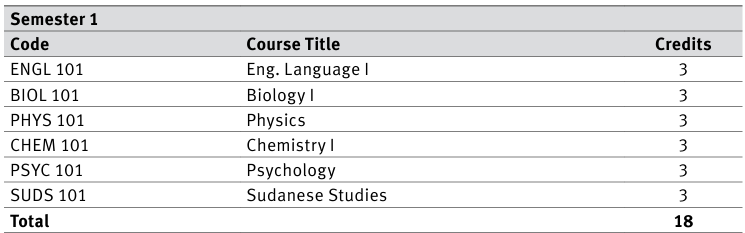
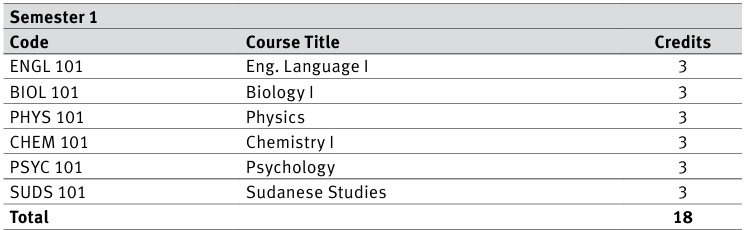
Semester 1
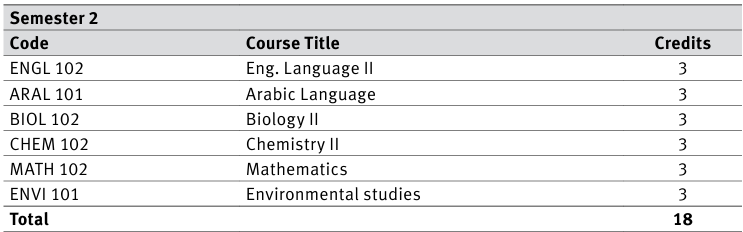
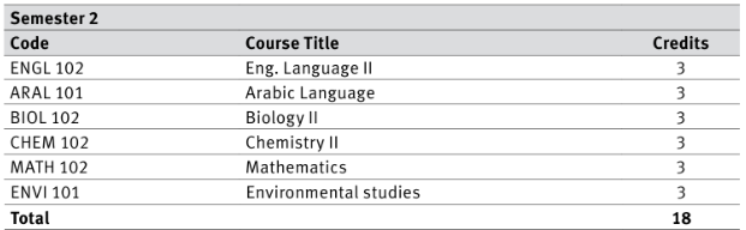
Semester 2
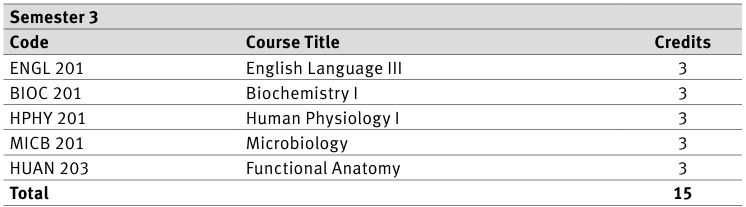
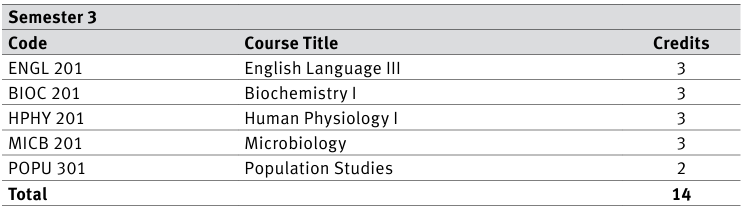
Semester 3
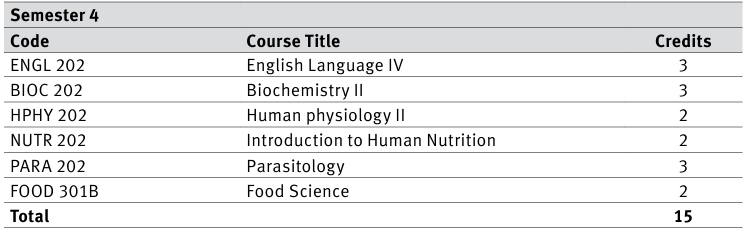
Semester 4
Semester 5
Semester 6
Semester 7
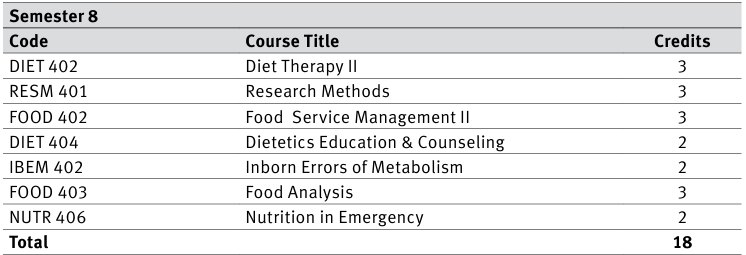
Semester 8
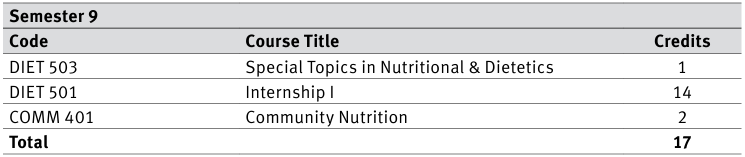
Semester 9
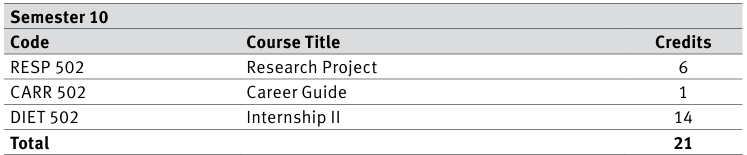
Semester 10
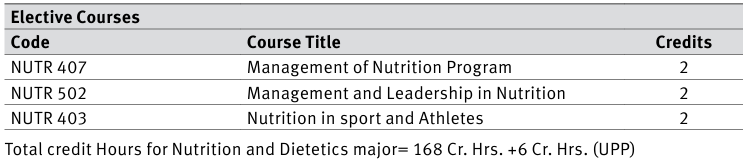
Elective Courses
Semester 1
Semester 2
Semester 3
Semester 4
Semester 5
Semester 6
Semester 7
Semester 8
Semester 9
Semester 10
Elective Courses
Semester 1
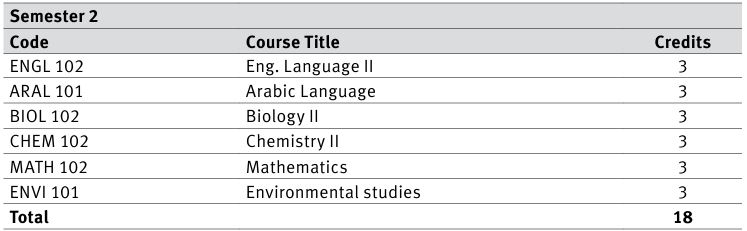
Semester 2
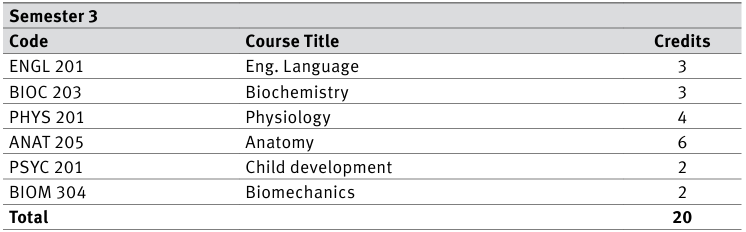
Semester 3
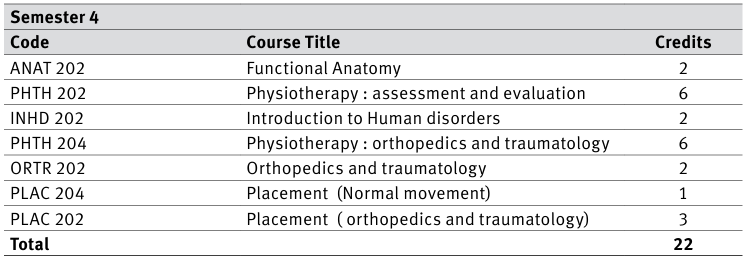
Semester 4
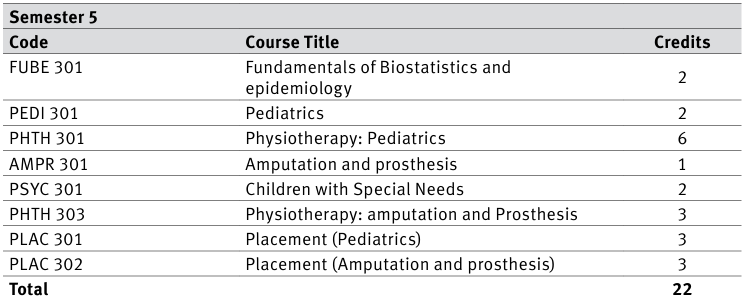
Semester 5
Semester 6
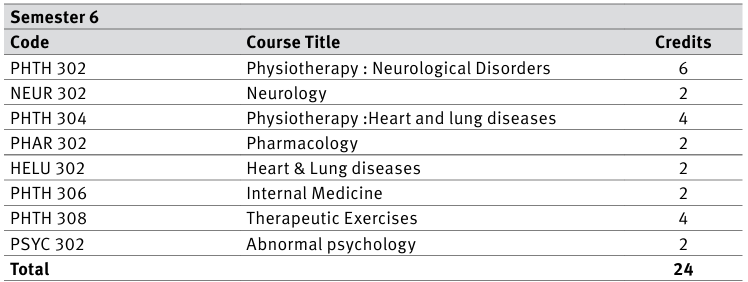
Semester 7
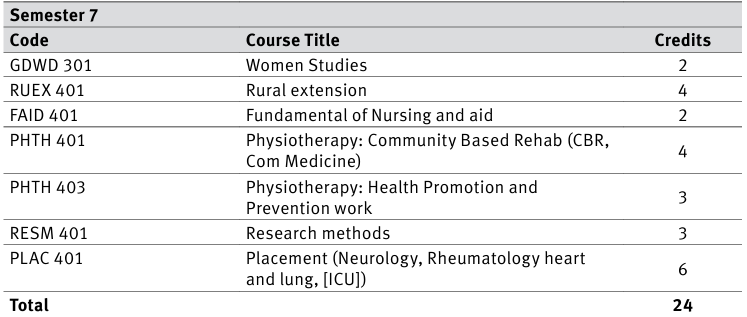
Semester 8
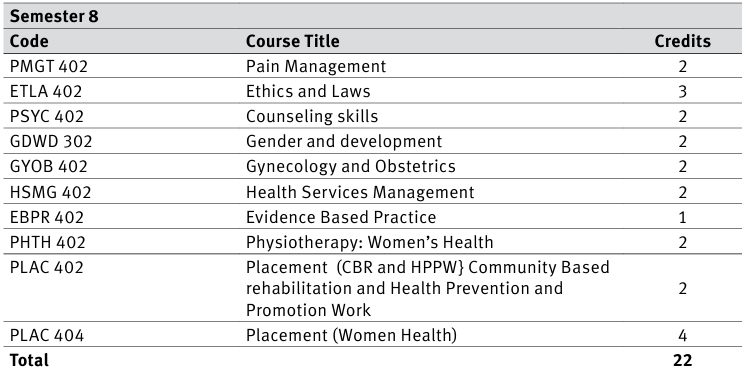
Semester 9
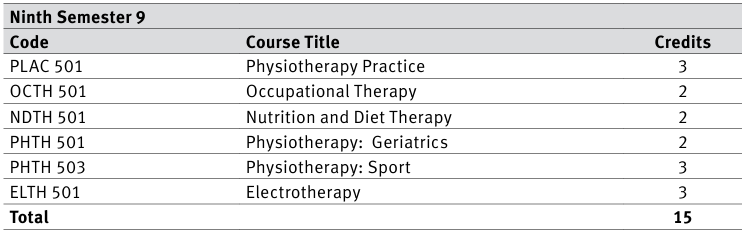
Semester 10
Course Descriptions
ENGL 201 English Language III (N&DT, PH, PT) 3 cr.
This course offers practice in different techniques of reading, inferring meanings of new words and word formation, writing short paragraphs and developing essays; it includes short and long reading passages and exercises in comprehension. Prerequisite: ENGL 102.
BIOC 201 Biochemistry I (N&DT, PH) 3 cr.
This course provides knowledge about structures and functions of carbohydrates, lipids , amino acids, proteins, enzymes and nucleic acids, and vitamins sources, in addition to functions and deficiency diseases. Prerequisite: CHEM 102 .
HPHY 201 Human Physiology I (N&DT, PH) 3 cr.
This course provides knowledge about cell membrane physiology and body fluids, blood, excitable tissues, cardiovascular system and nervous system. Prerequisite: BIOL 101.
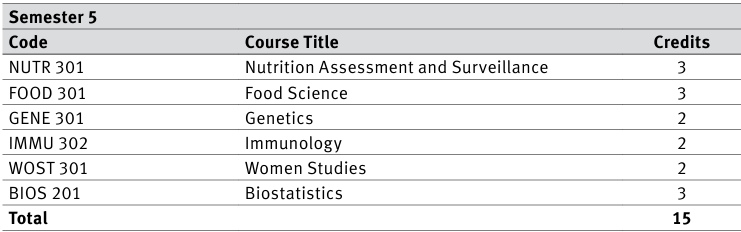
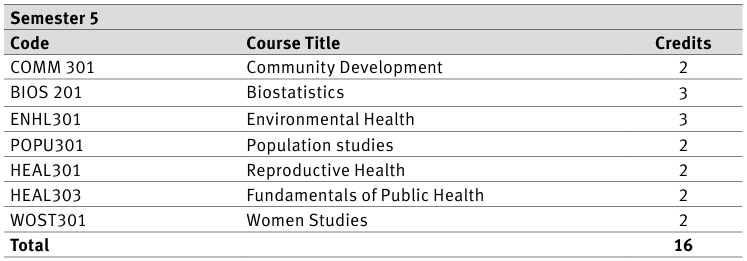
BIOS 201 Biostatistics(N&DT, PH) 3 cr.
This course introduces basic concepts and principles of statistics and applications to problems relevant to students’ fields of study. Prerequisite: MATH 102.
MICB 201 Microbiology (N&DT, PH) 3 cr.
This course covers developments, microbial groups, morphology, physiology, reproduction, nutrition, genetics, distribution and importance. Practical lessons cover isolations, examination and testing physiological, biochemical characteristics and antimicrobial reactions. Prerequisites: BIOL 101 and BIOL 102.
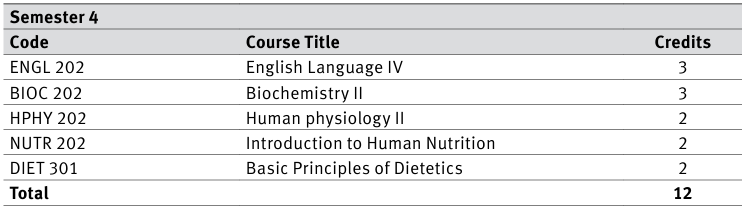
ENGL 202 English Language IV (N&DT, PH) 3 cr.
This course guides to analysis of language, covers grammatical systems , develops skills of reading, writing, speaking and listening in integrative way, and reading passages related to different fields. Prerequisite: ENGL 201.
PARA 202 Parasitology (PH) 3 cr.
This course provides basic knowledge of parasitic agents of local and regional human diseases and epidemiology awareness, for prevention and control at individual and community levels. Prerequisite: BIOL 101
BIOC 202 Biochemistry II (N&DT, PH) 3 cr.
This course illustrates degradation and biosynthesis of biochemical compounds within animal and human tissues, movement of metabolites and calculation of produced and consumed energy through different pathways. Prerequisite: BIOC 201.
HPHY 202 Human Physiology II (N&DT, PH) 2 cr.
This course provides knowledge about endocrinology, digestive, respiratory, urinary and reproductive systems. Prerequisite: HPHY 201.
NUTR 202 Introduction to Human Nutrition (N&DT, PH) 2 cr.
This course explains relationship of nutrition and human body, includes dietary sources, intake levels, biological determinants of nutrient requirements, energy balance, measurements of body composition, use of food tables, exchange lists and nutrition pyramid in diet planning and evaluation. Corequisite: BIOC 201.
HUAN 203 Functional Anatomy (N&DT) 3 cr.
This course describes fundamentals of human anatomical structure of major body systems, emphasizing form-function relationships; practical lessons involve human skeletal collections, dissection of cadavers and preserved specimens. Prerequisite: BIOL 101.
NUTR 301 Nutrition Assessment and Surveillance (N&DT) 3 cr.
This course introduces techniques and interpretations of nutrition assessment parameters for nutritional status, requirements for interventions/applications in health and disease, theories and practices of surveillance supported by examples from Sudan and the developing world. Prerequisites: NUTR 202 and BIOC 202.
DIET 301 Basic Principles of Dietetics (N&DT) 2 cr.
This course presents overview of the profession, career options, developments, professional organizations, code of ethics, standards of practice, values, creativity, and an introduction to legislative processes and issues. Prerequisite: None.
FOOD 301 BFood Science (PH) 2 cr.
This course explains roles of biology, chemistry and physical sciences for the study of food production, processing, preparation, microbial spoilage, deterioration, preservation, and management. Prerequisite: BIOC 201.
FOOD 301 Food Science (N&DT) 3 cr.
It is the discipline in which biology, physical science, and food chemistry are used to study the nature, chemical changes, and the different preservation methods which influence the quality of the food. Prerequisites: NUTR 202 and FOOD 202.
GENE 301 Genetics (N&DT) 2 cr.
This course presents principles of heredity at organism, cellular and molecular levels and discusses functions of chromosomes, genes and genetic material with emphasis on eukaryotic gene structure and expression, and some human heritable diseases as examples. Prerequisite: HPHY 202.
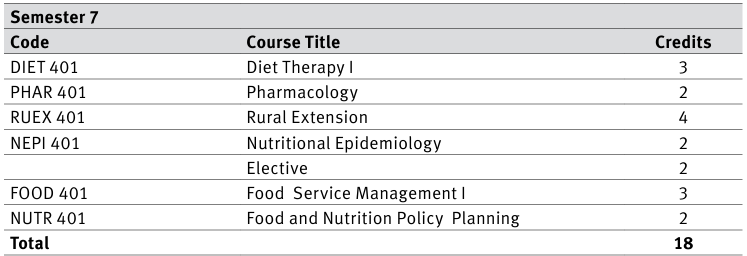
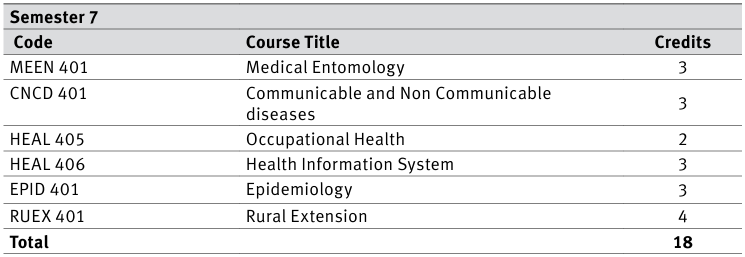
RUEX 401 Rural Extension (N&DT, PH, PT) 4 cr.
WOST 301 Women Studies (N&DT, PH, PT) 2 cr.
See University required courses.
HEAL 301 Reproductive Health (PH) 2 cr.
This course provides basic knowledge on female and male reproductive systems, reproduction, and common abnormalities and diseases, to understand social impact of reproductive health services, programs and policies. Prerequisite: HPHY 202.
COMM 301 Community Development (PH) 2 cr.
This course describes theories and approaches in community development and explains indicators of developed and developing countries (North and South).
POPU 301 Population Studies (PH) 2 cr.
This course introduces population studies, demography, population dynamics, growth, fertility, mortality, migration, economic development and related topics of urbanization and international migrations.
HEAL 303 Fundamentals of Public Health PH) 2 cr.
This course introduces key terms and concepts of public health science and practices, contrasts individualized and population approaches of health and disease, and evolution of modern approaches to public health.
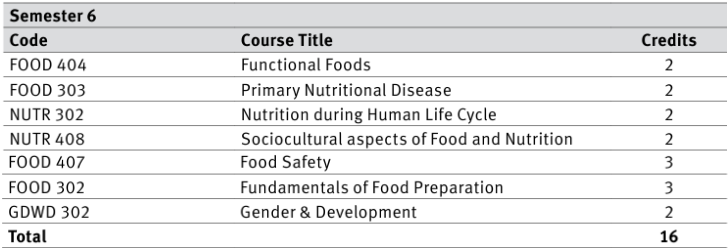
FOOD 303 Primary Nutritional Disease (N&DT) 2 cr.
Basic types of malnutrition, Protein energy malnutrition and starvation, Obesity, Micronutrient deficiencies. Prerequisite: NUTR 202.
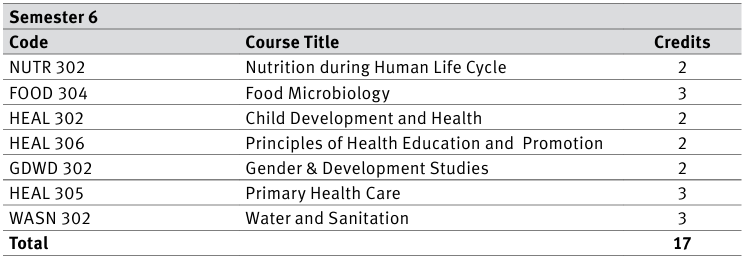
NUTR 302 Nutrition during Human Life Cycle (N&DT, PH) 2 cr.
This course explores nutrition across lifespan from biological and psychosocial perspectives, impact on preconception, pregnancy, lactation, infancy, childhood, adolescence, adulthood, and ageing, normal growth, recommended dietary allowances, deficiencies and health problems. Seminars presented by students. Prerequisite: NUTR 202.
FOOD 302 Fundamentals of Food Preparation (N&DT) 3 cr.
This course covers basic principles of food preparation and latest standards of quality control, involving theoretical and practical sessions. Prerequisite: FOOD 301.
FOOD 304 Food Microbiology (PH) 3 cr.
This course provides knowledge about microbial growth requirements, food spoilage, preservation methods, microbial food production, fermentations, food-borne diseases, legislation and strategies for control. Prerequisite: MICB 201.
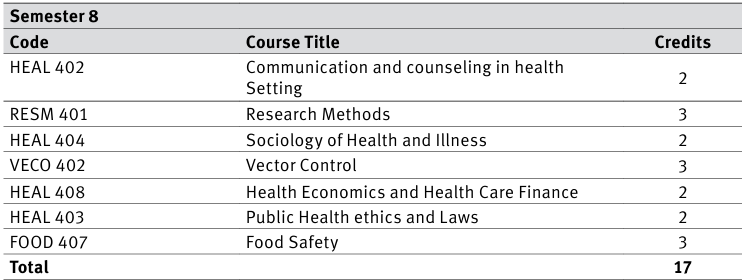
FOOD 407 Food Safety (N&DT, PH) 3 cr.
This course covers aspects of food sanitation and hygiene, including introduction to hygiene, food handling, vending, processing, factory water reuse, food safety – contamination routes and control measures. Prerequisite: MICB 201.
HEAL 302 Child Development and Health (PH) 2 cr.
This course provides knowledge on child development and health from conception to late adolescence with emphasis on illness, immunization, postnatal screening, infant feeding, effects of social environment, accidents, child abuse and disabilities. Prerequisite: HEAL 301.
WOST 302 Gender and Development (N&DT, PH, PT) 2 cr.
Prerequisite: WOST 301.
IMMU 302 Immunology (N&DT) 2 cr.
This course explores fundamental principles of immunity system and clinical applications of immunology. Co prerequisites: MICB 201 and HPHY 202.
WASN 302 Water and Sanitation (PH) 3 cr.
This course highlights health risks due to lack of safe drinking water, disease transmission due to poor sanitation and hygiene practices, emphasizing interventions for improving water,
sanitation and hygiene practices to reduce disease transmission. Prerequisites: MICB 201 and ENHL 301.
HEAL 306 Principles of Health Education and Promotion (PH) 2 cr.
This course covers methods for health promotion, for individual and community by explaining health determinants, ideologies and theories of health promotion, history, politics , ethics, community development, public policy, behavior, change, communication risks, planning and interventions evaluation. Prerequisite: HEAL 303.
ENHL 301 Environmental Health (PH) 3 cr.
It constitutes a set of policy, regulatory, advocacy and market-based mechanisms which transform human behavior to achieve society’s goals for the environment. Prerequisite: ENVI 101.
DIET 401 Diet Therapy I (N&DT) 3 cr.
This course provides knowledge, skills and techniques of planning nutritional care for specific patients with certain health problems, and importance of diet in the treatment focusing on theoretical aspects of nutritional care, a etiology, symptoms and nature of diseases.
Prerequisites: NUTR 302, FOOD 302, DIET 202 and NUTR 301.
PHAR 401 Pharmacology (N&DT) 2 cr.
This course covers roles of nutrition and pharmacology in improvements of patients’ treatments, using both approaches. Prerequisite: IMMU 302.
EPID 401 Epidemiology (PH) 3 cr.
This course introduces basics of descriptive and analytic epidemiology, key concepts on classification of disease, principles of inference, definitions of incidence and prevalence, use of rates, rate adjustment, outbreak investigation, design, cohort studies, case-control ,and
experimental , surveillance and screening. Prerequisite: BIOS 201.
NEPI 401 Nutritional Epidemiology (N&DT) 2 cr.
The course will provide students with the key components of epidemiology and its applications generally and in nutrition particularly. It will focus mainly on the collection, analysis, and interpretation of data on dietary intake and nutritional status of diverse population groups. It emphasizes critical evaluation of dietary assessment methods Prerequisites: BIOS 201 and NUTR 301.
MEEN 401 Medical Entomology (PH) 3 cr.
The role of arthropods as vectors of pathogens, or as parasites, causing disease in humans and animals. The principals involved will be illustrated with examples from selected diseases. The interaction of host and parasite and the dynamic nature of the epidemiologic system will be stressed. Prerequisite: PARA 202.
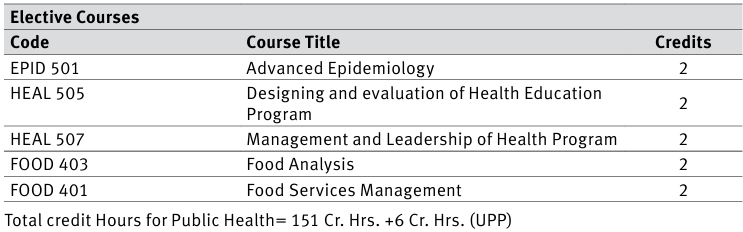
FOOD 401 Food Service Management I (N&DT) 3 cr.
This course introduces principles of effective resources management in design and administration of food service facilities, application of managerial processes of food delivery in a variety of settings, food preparation and high quality customer service.
Prerequisite: FOOD 302.
HEAL 305 Primary Health Care (PH) 3 cr.
This course provides knowledge about primary health care within primary health program in low income settings, philosophy, history, principles and practice of primary health care in developing countries. Prerequisite: HEAL 303.
CNCD 401 Communicable and Non-Communicable Diseases (PH) 3 cr.
This course focuses on common communicable diseases through food and vector borne diseases, or by direct contact, immunizing, sexually transmitted infections and zoonotic diseases, prevention, and control, also covers non-communicable diseases (NCD): cardiovascular diseases, diabetes, cancer, obesity and nutritional diseases. Prerequisites: HEAL 303 and WASN 302.
HEAL 403 Public Health Ethics, Laws (PH) 2 cr.
This course describes coherent, understanding of relationships between public health laws, ethics and human rights as important features , and issues in respective fields related to theory and practice of public health. Prerequisite: HEAL 303.
VECO 402 Vector Control (PH) 3 cr.
This course describes principles and practices of vector management, emphasizing arthropod pests affecting humans, effective use of today’s vector control tools and development of novel methods of targeting vectors. Prerequisite: MEEN 401.
HEAL 405 Occupational Health (PH) 2 cr.
This course highlights history of occupational health, exposure to disease and occupational health hazards, focusing on legal and regulatory issues in provision of occupational health services and work place health improvement. Prerequisite: ENVI 101.
NUTR 407 Management of Nutrition Program (N&DT) 2 cr.
This course describes implementation, monitoring and evaluation of nutrition programs in broader contexts, and impact to improve life quality. Co prerequisites: NUTR 302 and NUTR 405.
FOOD 403 Food Analysis (N&DT) 3 cr.
This course provides knowledge on scientific procedures and methodologies to quantify major components in food: moisture, fats, proteins, sugars, fibers, total ash and ash values, minor elements, vitamins and minerals, additives, and contaminants, Prerequisites: FOOD 306 and BIOC 202.
DIET 402 Diet Therapy II (N&DT) 3 cr.
This course provides knowledge, skills and techniques of diet therapy where diet plays an important role in treatment, focusing on theoretical aspects of nutritional care, a etiology, symptoms and nature of diseases, training for skills of planning nutritional care for specific patients. Prerequisites: DIET 401, NUTR 302, FOOD 302, DIET 202 and NUTR 301.
RESM 401 Research Methods (N&DT, PH, PT) 3 cr.
This course gives aspects of qualitative and quantitative research methods, introducing theoretical research methods: design, data collection, analysis and writing up, and presentation to demonstrate scientific approach. Co prerequisites: BIOS 201 and EPID 401 (FUBE 301 for PT).
FOOD 402 Food Service Management II (N&DT) 3 cr.
This course continues Food Services Management course II, emphasizing food catering, supply marketing and service. Prerequisite: FOOD 401.
DIET 404 Dietetics Education and Counselling Skills (N&DT) 2 cr.
This course describes application of counselling and learning theories with individuals and groups in clinical and community settings, including discussion, interviewing, counselling, assessment of learning activities, documentation, utilizing behavioral theory and evidence based strategies to increase effectiveness of diet therapy. Co prerequisites: DIET 301 and DIET 401.
IBEM 402 Inborn Errors of Metabolism (N&DT) 3 cr.
This course provides basic information of biochemical pathways, physiology, and factors of inborn errors of metabolic diseases of newly born infants, manifestations, diagnosis and intervention with medical and nutritional therapies. Prerequisite: NUTR 302.
FOOD 404 Functional Foods (N&DT) 2 cr.
This course covers perspectives of functional food and health promoting food recipes; biochemical aspects and disease prevention, exploring health enhancement with dietary components beyond basic nutrition, or gaining specific non-nutritive benefits to reduce disease risks. Prerequisite: FOOD 301.
HEAL 402 Communication and Counselling in Health Settings (PH) 2 cr.
This course explains positive response with confidence to situations in a variety of health care settings, and ways of health care in hospital, primary care, or in community settings, affecting counsellor roles and therapeutic processes, considering help of people with special needs.
HEAL 404 Sociology of Health and Illness (PH) 2 cr.
This course demonstrates the relationship between social structures, disease incidence and distribution of health care in modern society, and impacts of class, medical profession, gender and ethnicity.
HEAL 406 Health Management Information System (PH) 3 cr.
This course provides an overview of management of information system in health care settings, presenting review of information management value and role of information technology in provision of high quality care and decision making. Prerequisite: HEAL 401.
HEAL 408 Health Economics and Health Care Finance (PH) 2 cr.
This course introduces models and concepts in health economics with a view to benefit health care cost containment, looking at experiences employed by western countries and socialist regimes in cost-containment of high health care prices, citing Chinese model of low costs effective programs.
NUTR 408 Sociocultural Aspects of Food and Nutrition (N&DT) 2 cr.
This course explains influence of socio-cultural determinants: economic, structure, product value, habits and other factors of individuals’ nutrition.
NUTR 401 Food Nutrition Policy and Planning 2 cr.
This course applies relevant policy-making theory and practice to the area of food and nutrition. It uses qualitative and quantitative information to assess nutrition problems.
COMM 401 Community Nutrition (N&DT) 3 cr.
This course expands on the basics of nutrition courses with special emphasis on community nutrition and the nutrition needs of the population. It explores the role, function, and principles necessary for the professional effectiveness of a community nutritionist; principles of program planning and educational theory. Prerequisites: NUTR 302 and NUTR 406.
NUTR 406 Nutrition in Emergency (N&DT) 2 cr.
This course describes disasters in the world and Sudan, refugees and displaced in developing world, and public health interventions, emergency food polices, feeding programs, food as a right for refugees and displaced, role of scientists, agencies and governments in food assistance. Prerequisites: NUTR 302 and FOOD 303.
DIET 503 Special Topics in Nutrition & Dietetics (N&DT) 1 cr.
This course provides opportunity to integrate knowledge of clinical and community dietetics and management principles through public speaking, writing, organizational and problem solving skills, to perform, supervise, manage and participate in activities completed by entry level dieticians. Prerequisite: all subjects from semester 1 to semester 8.
DIET 501& DIET 502 Internship I and II (N&DT) 28 cr.
Students practice eight months on food services, in hospitals and community affiliations, an internship of eight contact hrs./day for four days/week (32 hrs./week), a full-time program beginning July, ending in March each academic year. Prerequisite: all subjects from semester 1 to semester 8.
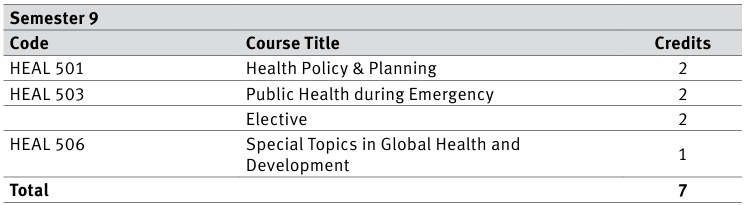
HEAL 501 Health Policy and Planning (PH) 2 cr.
This course provides an overview about three major issues in health care: first, health policy principles and practices in Sudan, second, planning health care basics, cycles and results, and third, on management of public health practitioners. Prerequisites: HEAL 406 and HEAL 408.
HEAL 503 Public Health during Emergency (PH) 2 cr.
This course provides an overview of current health-related challenges and policy debates concerning appropriate responses to populations affected by conflicts. Prerequisite: HEAL 401.
NUTR 501 Nutrition Counselling and Communication Skill (N&DT) 3 cr.
This course focuses on counselling and learning theories with individuals and groups in clinical and community settings, and communication skill needed to convey a counselling session, and training for target groups. Prerequisite: NUTR 402.
FOOD 501 Food and Nutrition Policy Planning (N&DT) 2 cr.
This course offers diverse skills for successful impact on food policy and nutrition interventions, providing conceptual and analytical skills required for program managers and policy analysts with statistical and research skills, for technical program planning, implementation and evaluation. Prerequisite: NUTR 405.
HEAL 506 Special Topics in Global Health and Development (PH) 1 cr.
This course provides concepts and aspects of global health, including: burden, distribution of disease and mortality; determinants of global health disparities; planning of global health policies, outcomes of health interventions. Prerequisite: all subjects from semester 1 to semester 8.
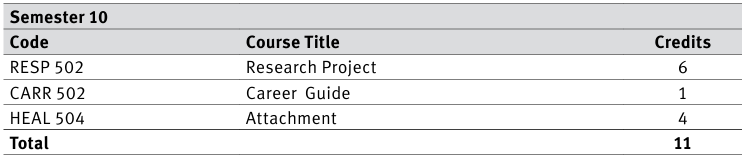
HEAL 504 Attachment (PH) 4 cr.
This course offers significant opportunity to apply knowledge and classroom skills for achievement of practical goals and refinement of skills, under the supervision of a preceptor and a faculty advisor. Prerequisite: all subjects from semester 1 to semester 8.
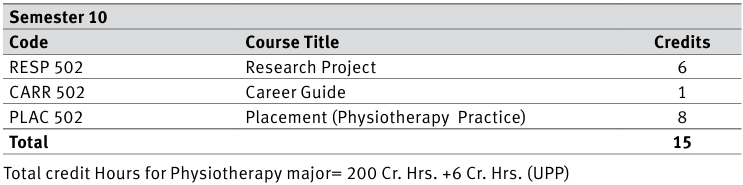
RESP 502 Research Project (N&DT, PH, PT) 6 cr.
This is an assigned research problem in a field of specialization supervised by a staff member, dissertation presented at the end of semester for evaluation by an internal supervisor and /or an external examiner. Prerequisite: RESM 401.
CRGD 502 Career Guide (N&DT, PH, PT) 1 cr.
This course provides 5th year students with basic information of different service systems of future work activities and methods in Sudan, for clear understanding of jobs in relation to labor market for graduates.
BIOC 203 Biochemistry (PT) 3 cr.
This course introduces bio-molecules, importance, sources, sites and structures of compounds, enzymes , vitamins , and deficiency diseases, degradation and biosynthesis of metabolites inside human tissues, their movement, and energy calculation for different biochemical pathways. Prerequisites: CHEM 101 and CHEM 102.
PHYS 201 Physiology (PT) 4 cr.
This course introduces general principles of human physiology, includes neural and hormonal control mechanisms, of musculoskeletal, circulatory, respiratory, digestive, urinary, immune, reproductive, and endocrine systems, and body response to exercise , and integration of organ system functions. Prerequisite: BIOL 101.
ANAT 205 Anatomy (PT) 6 cr.
This course emphasizes anatomical structure of muscles, skeleton, joints, central and peripheral nervous system offering basis for physiotherapist specific subjects. Prerequisite: BIOL 101.
PSYC 201 Child Development (PT) 2 cr.
This course provides information about child physical and motor development.
BIOM 304 Biomechanics (PT) 2 cr.
This course provides basic Biomechanics of the Musculoskeletal System and an understanding of forces acting on the human body in given situation, during work and therapeutic exercise. Co prerequisite: ANAT 205.
PHTH 203 Physiotherapy: Assessment and Evaluation (PT) 6 cr.
This course introduces theoretical and practical principles and concepts, assessment and evaluation of a person’s motor function approach, case history and basic examination to evaluate findings for functional diagnose according to ICF, including placement for four days to record normal movements. Prerequisites: ANAT 205 and PSYC201.
ANAT 202 Functional Anatomy (PT) 2 cr.
This course offers the opportunity to learn functional anatomy through movement experiences, analysis and reflection, including practical skill training sessions and independent study, focusing on selected body areas. Prerequisite: ANAT 205 and BIOM 304.
FUBE 301 Fundamentals of Biostatistics and Epidemiology (PT) 2 cr.
This course introduces basic biostatistics and epidemiology, descriptive and analytic; concepts include disease classification, principles of inference, incidence and prevalence, rates, adjustment, outbreak investigation, study design, cohort studies, case-control, experimental surveillance and screening. Prerequisite: MATH 102.
INHD 202 Introduction to Human Disorders (PT) 2 cr.
This course describes structure and function of the normal human tissues and microbial disorders and general pathology and disease mechanisms of certain systems. Prerequisite: PHYS 201.
PHTH 204 Physiotherapy II: Orthopaedics and Traumatology (PT) 7 cr.
This course provides theoretical and practical learning activities for basic set of exercises for patients with musculoskeletal disorders, including resistance, range of motion, endurance, motor learning, coordination, balance, stability, biomechanics therapy and use of external forces or body positions. Co prerequisites: PHTH 201 and ORTR 202.
ORTR 202 Orthopaedics and Trauma (PT) 2 cr.
This course highlights orthopaedics and fractures affecting locomotion of human body, introducing orthopaedics relationship and physiotherapy, musculoskeletal disease, of bone and soft tissue components, orthopaedic operations needed by physiotherapists to plan pre and post-operative interventions. Prerequisite: ANAT 204.
PLAC 202 Placement: Orthopaedics and Trauma (PT) 6 cr.
This course offers supervised placement at hospitals and outpatient facilities with access to patients to assess plans and implement treatments. Co prerequisite: PHTH 204.
PSYC 301 Children with Special Needs (PT) 2 cr.
This course explains disabilities and impairments related to children needing special care and educational requirements , emphasizing physiotherapist role. Prerequisite: PSYC 201.
PEDI 301 Pediatrics (PT) 2 cr.
This course offers basic understanding of pediatric diseases and conditions requiring physiotherapy as part of management plan. Prerequisite: PHYS 201.
PHTH 301 Physiotherapy: Pediatrics (PT) 6 cr.
This course presents knowledge about development of functional skills and musculoskeletal structures, diseases and body function, physical therapy management, limitations, including neurologic and other conditions. Prerequisite: PHTH 202, Co prerequisite: PEDI 301.
AMPR 301 Amputation and Prosthesis (PT) 2 cr.
This course explains medical theory behind causes, types and assessment of amputation surgeries and physiological status of amputees. Prerequisite: PHTH 202.
PHTH 303 Physiotherapy: Amputation and Prosthesis (PT) 3 cr.
This course describes accidents and trauma that might require removing limbs or parts of limbs; it provides experience to put on elastic bandage, prosthesis or orthosis to extremity, restore gait, locomotion, and balance. Prerequisite: PHTH 202, Co prerequisite: AMPR 301.
PLAC 301 Placement: Pediatrics (PT) 6 cr.
This course supervises placement at community care, outpatient facilities, rehabilitation institutions focusing on physiotherapy in pediatrics for three weeks and extra three weeks focusing on physiotherapy for amputees, carrying out relevant practical physiotherapeutic tasks. Prerequisite: PHTH 202, Co prerequisite: PHTH 301.
PLAC 301 Placement: Amputation and Prostheses (PT) 6 cr.
Clinical placement focusing on amputation physiotherapy, amputee care and relevant prosthetics and orthotics, Co prerequisite: AMPR 301.
NEUR 302 Neurology (PT) 2 cr.
This course offers basic knowledge on patho-physiological mechanisms affecting Central and Peripheral Nervous System in relationship to rehabilitative process, to acquire basic clinical and instrumental neurological semeiotics for planning and evaluating physiotherapy treatment of neurological patients. Prerequisite: PHYS 201.
PHTH 302 Physiotherapy: Neurological Disorders (PT) 6 cr.
This course is designed to develop skills in analysis and management of movement disorders, including theories of motor control and neuroplasticity to develop skills in clinical reasoning, promotes knowledge of neurological conditions enabling flexible, holistic rehabilitation. Prerequisite: PHTH 202, Co prerequisite: NEUR 302.
HELU 302 Heart and Lung Diseases (PT) 2 cr.
This course is designed to help acquire basic concepts of cardiovascular diseases more relevant to Physiotherapy, and investigates diagnostic processes to individuate when dealing with heart and lung diseases to plan the rehabilitative treatment. Prerequisite: PHYS 201.
PHTH 304 Physiotherapy: Heart and Lung Diseases (PT) 4 cr.
This course provides an introduction to assessment and treatment of cardiovascular and respiratory problems to develop problem solving and evidenced based approach, enabling effective clinical reasoning, to integrate, apply and evaluate both specific and generic physiotherapeutic skills of assessment and management. Prerequisite: PHTH 202, Co prerequisite: HELU 302.
PHTH 306 Internal Medicine (PT) 2 cr.
This course provides introduction to assessment and treatment of rheumatologic diseases to develop problem solving and evidenced based approach, giving fundamental knowledge of general and specialist medicine to plan adequately rehabilitative interventions for different diseases. Prerequisites: INHD 202 and PHYS 201.
PHTH 308 Therapeutic Exercises (PT) 4 cr.
This course offers practical courses for different types of exercises, and experience to train and instruct, choosing beneficial exercise levels for patients, learn changing exercises, evaluate quality of exercise programs and plan for progression. Prerequisites: PHTH 202, ANAT 205 and PHYS 201.
PHAR 302 Pharmacology (PT) 2 cr.
This course offers basic knowledge for understanding different drug treatments, related to physiotherapy, providing information about common drugs for rehabilitation, such as pain killers, anti-inflammatory and anti-spastic. Prerequisite: BIOC 203 and INHD 202.
PSYC 302 Abnormal Psychology (PT) 2 cr.
Explores historical views and current perspectives of abnormal behavior, emphasizing major diagnostic categories and criteria, individual and social factors of maladaptive behavior, adjustment, anxiety and personality disorders.
FAID 401 Fundamental of Nursing Aid (PT) (1-1) 2 cr.
This course provides the skills necessary to give care in the case of an emergency, to help sustain life and minimize the consequences of injury or sudden illness encountered during a physiotherapy patient session. Co prerequisite: PHYS 201.
PHTH 401 Physiotherapy: Community Based Rehabilitation (PT) 4 cr.
This course emphasizes principles of Primary Health Care to orientate towards provision of “global” Health Care, promotion, disease prevention, rehabilitation through community action, for people with disabilities and families under CBR, to ensure benefits. Co prerequisite: INHD 202.
PHTH 403 Physiotherapy: Health Promotion and Prevention Work (PT) 6 cr.
This course covers approaches in health promotion practice, addressing individuals and community, describing structural health determinants and practice settings-based for health promotion, planning and interventions, focusing on physical activity to obtain goal.
Co- Prerequisite: PHTH 202.
PLAC 401 Placement: Physiotherapy in Neurology, Heart and Lung, and Rheumatology (PT) 6 cr.
This course offers full-time supervised placement at hospitals and rehabilitation units with access to neurology, heart/lung and rheumatologic patients, for practicing assessment, interventions and evaluation of treatments. Prerequisites: NEUR 302, PHTH 302, PHTH 304, PHTH 306 and HELU 302.
PMGT402 Pain Management (PT) 3 cr.
This course helps to understand interdependent relationships between biological, psychological and social phenomena of pain, implications for physiotherapy in pain management, emphasizing basic concepts to assess theoretical rationale in designing physiotherapy interventions. Prerequisites: PHYS 201, INHD 202 and PHTH 202.
ETLA 402 Ethics and Laws for Physiotherapy (PT) 3 cr.
This course offers the opportunity to appreciate the National Health and Judicial System governing medical practice, by learning the professional code of conduct in order to maintain high degree of excellent service to uphold Physiotherapy as a Profession.
PSYC 402 Counselling Skills (PT) 2 cr.
This course provides techniques and skills, focusing on core conditions towards client, with right approach and skills, and demonstrating and practicing acquired knowledge in form of role plays and exercises in group work.
GYOB 402 Genaecology and Obstetrics (PT) 2 cr.
This course helps acquiring basic concepts of common gynaecological and obstetric pathologies, urological disorders and changes of pregnancy. Co prerequisite: PHYS 201.
HSMG402 Health Services Management (PT) 2 cr.
This course helps thinking critically about fundamental issues of health services, new concepts and practices in healthcare management, drawing attention for important issues, as strategic planning , evaluation, information management, and quality control.
EBPR 402 Evidence Based Practice (PT) 1 cr.
This course provides basic theoretical and practical knowledge about evidence-based practice in clinical settings and research on EBP skills for clinical placement. Prerequisite: RESM 401.
PHTH 402 Physiotherapy: Women’s Health (PT) 4 cr.
This course introduces role of physical therapists in women’s health, specifically obstetrics and gynaecology and health promotion for assessment and treatment techniques, applying evidence and context based practice when implementing effective treatments. Co prerequisite: GYOB 402.
PLAC 402 Placement: Physiotherapy in Community Based rehabilitation and Health Prevention and Promotion Work (PT) 4 cr.
This course offers supervised a 2-week placement project at a given community to use physiotherapy as prevention and health-promotion, to enhance equal participation and accessibility for all groups in society. Prerequisites: PHTH 401 and PHTH 403.
PLAC 404 Placement: Physiotherapy and Women’s Health (PT) 8 cr.
This course offers supervised a four-week placement at hospitals, community-care services and outpatient facilities focusing on women’s health. Co prerequisite: PHTH 402.
OCTH 501 Occupational Therapy (PT) 3 cr.
This course offers basic knowledge of occupational therapist practice with emphasis on work risk factors, showing skills of occupational therapists in various fields for successful intervention with patients of impaired functional activities. Prerequisites: PHTH 202 and PHTH 403.
PHTP 501 Physiotherapy Practice (Comprehensive exam) (PT) 1 cr.
The exam aims to assess and evaluate students’ knowledge in basic sciences and physiotherapy skills. Prerequisite: all PHTH courses.
NDTH 501 Nutrition and Diet Therapy (PT) 3 cr.
This course introduces certain problems in health and diet role in treatment, focusing on theoretical aspects of nutritional care process, disease, symptoms and nature, and acquaints students with nutritional care needed by patients. Prerequisite: BIOC 203.
PHTH 501 Physiotherapy: Geriatrics (PT) 3 cr.
This course presents a comprehensive overview of geriatric exercise principles, including differential diagnosis, practice patterns pertaining geriatric syndromes responding to therapeutic exercise programs by examination and evaluation procedures applicable for treating without referral for each area of physical therapy. Prerequisite: PHTH 202.
PHTH 503 Physiotherapy: Sport (PT) 3 cr.
This course introduces a scientifically-based clinical approach to treating athletes, based on the concept that sporting activities require a state of readiness, which requires a basic level of fitness to perform at highest levels of musculoskeletal and neuromuscular activities.
Prerequisite: PHTH 202.
PLAC 502 Placement: Physiotherapy Practice (PT) 16 cr.
This course upgrades student to independent physiotherapists, using problem-solving in reasoning- implement, evaluate and document intervention/treatment. Prerequisite: PHTP 501.
Elective courses:
NUTR 407 Management of Nutrition Program (N&DT) 2 cr.
The implementation, monitoring and evaluation of nutrition program in its broader development context and its impact on the society to raise the quality of well being of individuals and how they are improving the quality of life.
NUTR 403 Nutrition for Fitness and Athletes (N&DT) 2 cr.
This course is designed to develop an understanding of special nutritional needs for participants in regular physical activity of individual and team sports, focusing on metabolism of exercises and role of diet in athletic performance. Prerequisites: NUTR 301 and NUTR 302.
NUTR 502 Management and Leadership in Nutrition (N&DT) 2 cr.
This course offers skills, styles and qualities of leadership for successful impact in nutrition field, providing conceptual and analytical skills, for administrative, ethical and professional leadership in nutrition and health care. Prerequisite: NUTR 501.
Graduation Requirements
Graduation Requirements
Disciplines Admission
• It is the student choice to join any discipline (major).
• Each student has to fill and submit the application form with choices during the week of the semester (freshman year).
• The School Vise-Dean for Academic Affairs follows the assortment of the applications and issues the final list of students in each discipline.
Each discipline is governed by school by-laws:
Nutrition & Dietetics Major and Public Health Major
• Student’s choice
• Pass all the freshman courses
• Earn at least an average mark ≥ 60 in the following courses:– Biology I (BIOL101) – Math (MATH102)– Chemistry I (CHEM101)– Chemistry II (CHEM102)– English II (ENGL102)
Physiotherapy
• Student’s choice
• Pass all the freshman courses
• Earn an average mark ≥ 70 in the following courses:– Biology I (BIOL101) – Physics (PHYS101)– Chemistry II (CHEM102)– English I (ENGL101)
Postgraduate Programs
Master of Science in Nutrition and Dietetics
Mission
To train graduates, in practical skills in nutrition and dietetics through courses and an internship, with prepared manual, against a checklist of skills in nutrition and dietetics and further issues of diet therapy.
Vision
To have skilled graduates handling clinical cases in hospitals, health centres, home individualized care situations, community based institutions or relief agencies and able to conduct research tasks pertaining to nutrition and dietetics.
Admission
July of each year.
Admission Requirements
As set by the School of Graduate Studies and approved by the University Academic Council. The applicant should hold an honors Bachelor Degree from AUW or an equivalent degree from another recognized institution in health or nutrition. The following topics should have been covered at the bachelor level: Physiology, biochemistry, basic nutrition, applied nutrition programs, clinical nutrition, and nutrition during lifecycle, malnutrition, diet therapy, food service management, nutrition education, nutritional assessments tools, and principles of dietetics.
Degree Requirements / Curriculum Outline
Semester one
Semester Two
Semester Three

Semester Three

Course Descriptions
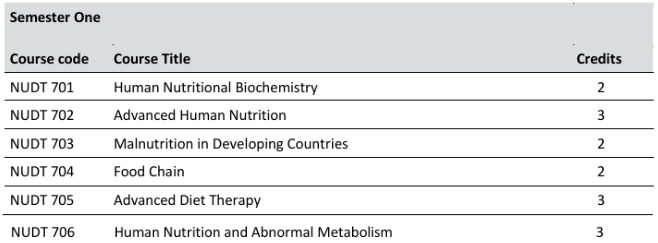
NUDT 701 Human Nutritional Biochemistry 2 cr.
Applies biochemistry to nutrient use from consumption through digestion, absorption, distribution, and cellular metabolism and integrates physiological processes from the cellular level through the multisystem operation of the whole body. This includes understanding of metabolism and the mechanisms by which diet can influence health.
NUDT 702 Advanced Human Nutrition 3 cr.
Lays the foundation for medical nutrition therapy courses. It covers study of macronutrients involved in bone metabolism, red blood cell information, antioxidant functions, water and electrolyte balance and evaluation of functional foods emphasizing their role in health.
NUDT 703 Malnutrition in Developing Countries 2 cr.
Presents major nutritional problems in developing societies. Covers approaches implemented at the household, community, national, and international levels to improve nutritional status. Explores the degree to which malnutrition can be prevented or reduced prior to achieving full economic development through targeted public and private sector interventions that address the causes of malnutrition.
NUDT 704 Food Chain 2 cr.
Explores changes in nutrients of food commodities during post – harvest storage and handling, changes in nutrients of food commodities during destructive preparation and processing and changes in Of Health Sciences nutrients of prepared or processed food commodities during storage. Explains the different components of the Food Composition Tables.
NUDT 705 Advanced Diet Therapy 3 cr.
Explains the relation between food, nutrition, lifestyle, and different disease conditions and how diet can affect the course of diseases. The course describes the diseases aetiology, clinical manifestations, investigation, and management and prevention.
NUDT 706 Human Nutrition and Abnormal Metabolism 3 cr.
Provides a detailed study of the structure and function of cells, tissues, and organ systems, control systems of the human body, homeostatic mechanisms, and the interrelations between the systems are studied.
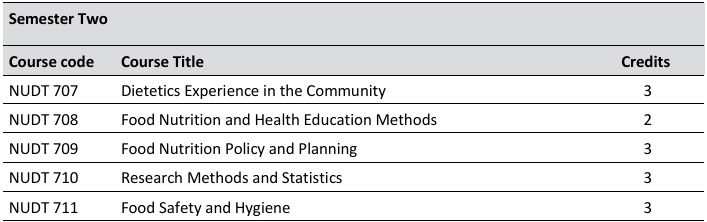
NUDT 707 Dietetics 3 cr.
Experience in the Community presents an advanced study of the principles and practice of community nutrition and education. Based on an understanding of the impact of public policy and social determinants of health. The course explores the concepts of health promotion,
program planning and evaluation, and current public health priorities.
NUDT 708 Food, Nutrition and Health Education Methods 2 cr.
Explains the process of food, nutrition and health education. Forecasts the needs for food, practice, and nutrition and health education in the Sudan. Determines strategies and constructs preventive measures and evaluate nutrition and health education program. Explores concepts of health promotion, program planning and evaluation, and current public health priorities.
NUDT 709 Food Nutrition Policy and Planning 3 cr.
Applies relevant policy-making theory and practice to the area of food and nutrition. Uses qualitative and quantitative information to assess nutrition problems. Selects and designs appropriate nutrition programs from a broad range of options.
NUDT 710 Research Methods and Statistics 3 cr.
Provides advanced training in research methods and statistics used in nutrition research. Explores the vital role of research in setting professional practice standards and health policy and in determining the role of nutrition in health and disease prevention.
NUDT 711 Food Safety and Hygiene 3 cr.
Explains the micro biome and gut health and gut-brain axis aspects, in relation to food infections. Considers the relationship between food-borne pathogens, spoilage organisms and food structure. Studies the systems used to control food safety hazards and quality assurance with examples within a practical context including legal requirements for sanitation programs.
NUDT 720 Internship in Nutrition and Dietetics 12 cr.
Students will rotate in hospitals, public health units, community health centers, long-term care homes, foodservice organizations.
NUDT 799 Thesis 6 cr.
Under the supervision of a faculty staff, the student will identify a thesis topic, develop the research strategies, design, data collection tool and analysis techniques and present a research proposal following specific guidelines and regulations.
Master of Science in Human Nutrition
Mission
To develop the research competency of the graduates in the discipline of Human Nutrition so as to contribute in the exploration of the nutritional problems and intervene where appropriate.
Vision
To have competent graduates that can address, analyze and intervene where nutritional problems provoke at national, regional and international levels.
Admission
Throughout the year.
Admission Requirements
- This follows the Admission requirements set by the School of Graduate Studies and approved by the University Academic Council.
- Specific requirement is the applicant should hold an honors Bachelor Degree from AUW or an equivalent degree from another recognized institution in health or nutrition. The following topics should have been covered at the bachelor level: Physiology, biochemistry, basic nutrition, applied nutrition programs, clinical nutrition, and nutrition during lifecycle, malnutrition, diet therapy, food service management, nutrition education, nutritional assessments tools, and principles of dietetics.
Graduation requirements

Degree Requirements / Curriculum Outline

Course Descriptions
NUTR 799 Thesis 30 cr.
Under the supervision of a faculty staff, the student will identify a research problem, develop and present a research proposal to the SGC following specific guidelines and regulations. The research topic should be within the human nutrition context.
Master of Public Health
Mission
To develop effective public health policy makers, leaders, and practitioners through an advanced, interdisciplinary education, practice, research and service to advance the public’s health, especially rural and underserved communities.
Vision
To be a leading, recognized program in developing public health policy makers, leaders, and practitioners who will lead their organizations, communities, state, and nation with ethics, integrity, gender equity and the practice of public health’s core competencies, policy development and quality service.
Admission
July of each year.
Admission Requirements
- This follows the Admission requirements set by the School of Graduate Studies and approved by the University Academic Council.
- Specific requirements the applicant should hold an honors Bachelor Degree from AUW or an equivalent degree from another recognized institution in relevant health or medical sciences, behavioral or social sciences or other fields related to public health.
Degree Requirements / Curriculum Outline
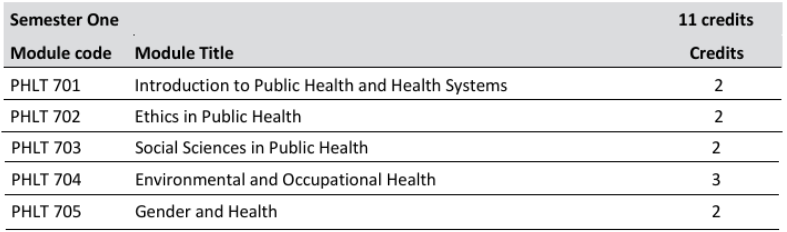
Semester One
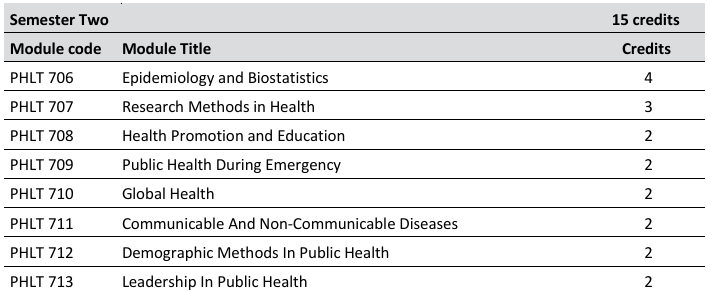
Semester Two
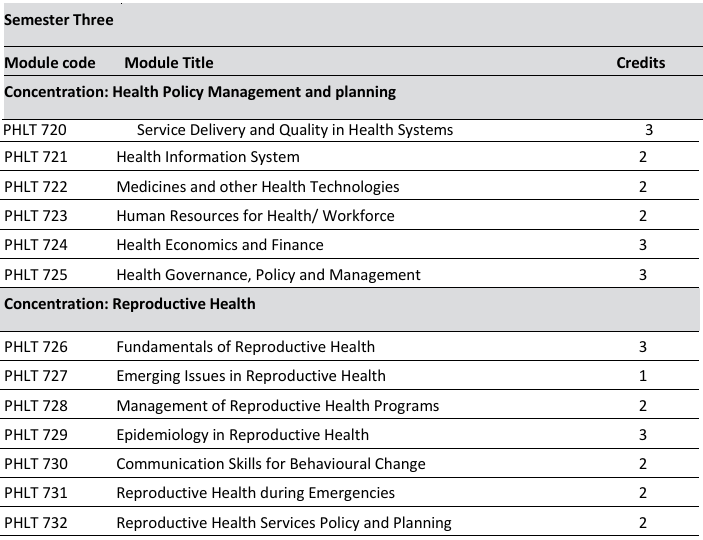
Semester Three
Semester Four

Course Descriptions
PHLT 701 Introduction to Public Health and Health Systems 2 cr.
This module is designed to familiarize students with the basic concepts concerning the organization of public health and medical care systems with reference to Sudan, definitions of health and illness and future trends that could impact the health of populations.
PHLT 702 Ethics in Public Health 2 cr.
This module explores the “application” of ethics to a broad range of contemporary public health issues that are pertinent to the public health practitioner and policymaker. It discusses the often-conflicting values and ethical dilemmas raised by current public health knowledge and its applications.
PHLT 703 Social Sciences in Public Health 2 cr.
This module applies sociological principles to medicine, health, illness, and health care. It provides insights generated by a framework to situate medicine, health, illness, and health care in a variety of institutional domains: economic markets, politics, science, religion, and culture, broadly construed.
PHLT 704 Environmental and Occupational Health 3 cr.
This module highlights the history of environmental health, the continuum from exposure to disease and occupational health hazards. It also focuses on legal and regulatory issues in the provision of occupational health services and methods for work place health improvement.
PHLT 705 Gender and Health 2 cr.
This module focuses on women and men health status using different perspectives such as rights, gender and social determinants of health. It applies an analytical framework based on needs, status, problems, policies and interventions for solutions and improvements. It also delves into varied forms of gender-ascribed behaviors.
PHLT 706 Epidemiology and Biostatistics 4 cr.
This module introduces students to basic concepts in statistics and epidemiology and the analysis and presentation of public health data. Sources of routine data and their interpretation will be discussed. The course will provide students with the basic tools needed to manage, analyze and interpret information and statistics.
PHLT 707 Research Methods in Health 3 cr.
This module is concerned with the design and conduct of research for obtaining information about health in the population and health settings including health-related behavior, experiences, attitudes and opinions. Ethical issues and practice in the conduct of health research are also discussed.
PHLT 708 Health Promotion and Education 2 cr.
This module provides an overview of concepts and principles of health education and health promotion and the contribution of psychological theories, principles, and techniques in the prevention of health related problems. It will also provide students with up to date innovation and development at international level.
PHLT 709 Public Health during Emergency 2 cr.
This module aims to provide students with knowledge and critical understanding of common public health problems in humanitarian emergencies. This is to enable them to adopt an evidence-based and reasoned approach to the critical assessment and management of the problems and to develop and evaluate strategies for their prevention and control.
PHLT 710 Global Health 2 cr.
The module describes the principles of global health addressing the most critical issues in global health and emphasizes the possible solutions. Major players in global health as well as various models of health systems will be discussed. Students will learn the impact of globalization, population dynamics, environmental changes and emerging global public health issues.
PHLT 711 Communicable and Non-Communicable Diseases 2 cr.
This module explores the nature, prevention, control, and treatment of communicable, chronic, degenerative, and idiopathic human diseases that are most common. Students will acquire the knowledge of the broad package of strategies for controlling diseases, from primary prevention, health promotion, and health legislation to screening for early detection, treatment and rehabilitation.
PHLT 712 Demographic Methods in Health 2 cr.
This module provides basic competencies in demographic methods and understanding of the strengths and limitations of population-level data and analyses. The module discusses theories of demographic transition and their application in population changes in developing countries, with specific application to Sudan. The module will emphasize hands-on and applied analysis of existing data sources.
PHLT 713 Leadership in Public Health 2 cr.
The module covers concepts and theories of leadership, present leadership challenges from public health practice and discover personal leadership attributes. Emphasis is on the application of the course material to real life public health problems and issues in the development of public health careers. Special topics may include futures research, systems thinking, sustainable development and visionary leadership.
PHLT 720 Service Delivery and Quality in Health Systems 3 cr.
This module provides the key components of health services delivery as well as its system, core inputs, process and outcomes. Indicators of Map-Health Service will also be presented to enable students to formulate a health service delivery system in different levels of health care. The module also covers health care quality improvement strategies and techniques to enhance customer satisfaction and reduce costs. The course will be taught as two-thirds for health services delivery and one-third for quality in health.
PHLT 721 Health Information System 2 cr.
This module helps students to recognize and assess the role of Information Systems within healthcare, particularly from a management and strategic perspective. This module addresses key themes in healthcare information systems as they aim to provide the necessary infrastructure needed to manage and produce relevant, timely, accurate and valid information to support the healthcare organization and its users.
PHLT 722 Medicines and other Health Technologies 2 cr.
The module provides students with the WHO’s essential medicines list to compare it with the national list through visits to primary and secondary health care institutions. The impact of use of medicines on public health, the regulations, the process, policies, and the institutions responsible for regulation in Sudan will be discussed.
PHLT 723 Human Resources for Health / Workforce 2 cr.
The module covers the key concepts and components of the management system of Human Resources for Health. Students will acquire the skills of designing and analysing different frameworks, apply HRH projection techniques to Sudan Health System context, perform job analysis and develop job descriptions for the employees in different health organizations. The process of recruitment, selection of staff, supervision, mentoring, coaching, training as well as evaluation will also be addressed.
PHLT 724 Health Economics and Finance 3 cr.
This module demonstrates how basic economic concepts, principles, and theories can be used to think about and clarify various health care issues. The course will also highlight the issues of financing health services through examining the different modes of finance such as general system of taxation, user fees, and health insurance.
PHLT 725 Health Governance, Policy and Management 3 cr.
The module provides the students with the components of management, principles and characteristics of organizations to adopt the operational model of Leadership and Governance in health sector. Different analysis skills, plan-types and planning cycle of strategic plan, policy analysis and policy cycle will be presented with practical illustrations from domestic and international settings.
PHLT 726 Fundamentals of Reproductive Health 3 cr.
This module covers males and females reproductive health across the life cycle and provides substantive knowledge in major areas of reproductive and sexual health. This module aims to improve knowledge, skills, and abilities to analyze, understand and capture the links between gender and reproductive health and the implications of gender inequality on reproductive health of various groups.
PHLT 727 Emerging Issues in Reproductive Health 1 cr.
The module mainly depends on the student’s search and participation in the reproductive health field. It will focus on pertinent issues related to reproductive health, including maternal and neonatal health, as priority issues on the global health agenda. It addresses other emerging reproductive health problems and appropriate interventions and best practices to deal with them.
PHLT 728 Management of Reproductive Health Programs 2 cr.
This module familiarizes the students with current strategies for the implementation and delivery of reproductive health programs. It highlights the major demographic and epidemiological data relevant to the development of programs, planning process and program cycle. It covers the different
management functions essential to sustain and implement successful reproductive health programs using regional and global examples.
PHLT 729 Epidemiology in Reproductive Health 3 cr.
The module emphasizes reproductive health issues affecting women and infants from the pre conception to post-natal periods, as well as adolescent and adulthood. Relevant methodological, clinical, policy and programmatic issues will be presented with practical illustrations from domestic and international settings to enable students to design a reproductive health epidemiology study, discuss relevant methodological issues and apply data to improve reproductive health programs and policy.
PHLT 730 Communication Skills for Behavioral Change 2 cr.
This module is designed to facilitate the student’s development of the communication skills necessary to interact effectively with families and clients. The student will learn and practice basic communication and interpersonal skills that are necessary in providing competent, effective behavioral changes for mothers in the community.
PHLT 731 Reproductive Health during Emergencies 2 cr.
This module covers the technical and management principles that are the basis of planning, implementing, and evaluating Reproductive Health programs for acutely affected populations in emergency setting. It includes sessions on assessment, epidemiology of major RH problems, surveillance, and program management in the context of an international relief operation.
PHLT 732 Reproductive Health Services Policy and Planning 2 cr.
This module provides an introduction to the evidence based policy formulation and planning processes within the reproductive health care system. The module will give emphasis to the policy formulation process, influencing policy and factors affecting reproductive health plans including health providers. The strategy of the course is to improve analytical and practical approaches to problem analysis, decision-making, policy, planning and monitoring.
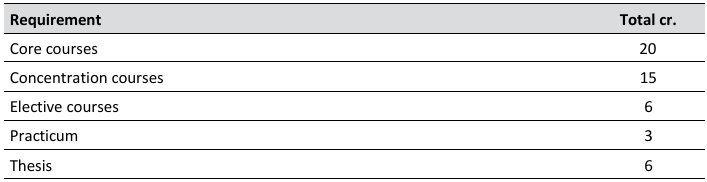
PHLT 733 Practicum in Public Health 3 cr.
The practicum is designed to provide an opportunity for the students to synthesize, integrate, and apply practical skills, learned through the modules to demonstrate mastery of the public health competencies. The practicum implementation process consists of three phases: Practicum Proposal,
Practicum, and Practicum Evaluation Activities. Prerequisite: Passed both core and concentration modules.
PHLT 799 Thesis 6 cr.
Under the supervision of a faculty staff, the student will identify a thesis topic in public health area, develop the research strategies, design, and data collection tool and analysis techniques and present a research proposal following specific guidelines and regulations.
Postgraduate Diploma in Diabetes Education
Mission
To recognize diabetes education as a distinct healthcare specialty for promotion of diabetes self management education and training as an integral part of diabetes care for an active, diligent, effective treatment of the disease.
Vision
To graduate health cadre who are professionals, capable of effective delivery of Diabetes education to the people with diabetes and their families, according to local needs and International standards.
Admission
July of each year.
Admission Requirements
- This follows the admission requirements set by the School of Graduate Studies and approved by the University Academic Council.
- Specific requirement is the applicant should hold a least a general Bachelor Degree in health.
Degree Requirements

Curriculum Outline
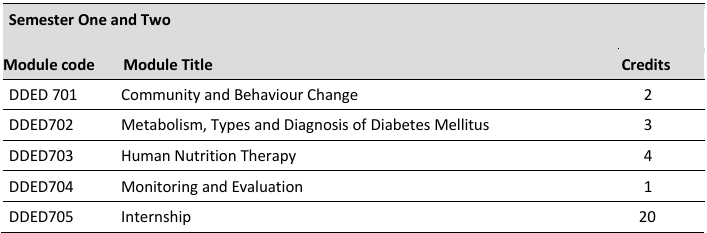
Course Descriptions
DDED 701 Community and Behavior Change 2 cr.
The module equips the students with the special needs for interdisciplinary care team skills in the management of diabetes. The modules will emphasize the education and communication skills required by the educator to raise the community awareness and facilitate change their behaviors and successfully manage their disease.
DDED 702 Metabolism, Types and Diagnosis of Diabetes Mellitus 3 cr.
The module provides the students with an understanding of normal pathophysiology and the defects that lead to abnormal glucose metabolism. It delivers the knowledge required about the different metabolic disorders of glucose metabolism, pathogenesis, clinical characteristics, and diagnostic criteria
DDED 703 Human Nutrition Therapy 4 cr.
Provide the knowledge and skills required by the educator to improve the quality of life in persons with diabetes through effective self-management skills, types of glucose-lowering medications and their methods of administration beside the medical nutritional therapy knowledge.
DDED 704 Monitoring and Evaluation 1 cr.
The module provides the knowledge, skills and attitudes required by the educators on how to monitor and evaluate diabetic patients at the health settings pre and post education.
DDED 705 Internship 20cr.
This module is a fully 6 months on-the-job training which consists of an exchange of services for experience between the student and a diabetes health center or clinic. During this period, the students are expected to use the knowledge and skills they learned from the modules and put them into practice. This way the students gain work experience as diabetes educators.